Designing Fulfilment Recovery to Protect Trust and Retention
Overview
Carry1st Shop is a digital marketplace serving millions of users, enabling instant purchases of game credits, data bundles, and digital services across web and mobile. Despite strong demand, post-payment fulfilment issues were quietly affecting trust, retention, and revenue.
Categories
Recovery & Error Handling
Conversion Optimization
Team
2× Product Designers, 1× Product Manager, 1x Customer Service Agent , 1x Pay Ops Specialist and 4× Software Engineers, 2x QA Engineers
Timeline
6 weeks (Discovery → Design → Iteration → Handoff)
Platform
Responsive Web · Mobile App (Ios and Android)
My Role
End-to-End UX · UX Strategy · Payments & Recovery · Platform Design · Transactional Emails
55%
Reduction in Support Tickets
25%
Reduction in Month 1 churn
125%
Uplift in month 1 retention
38%
Reduction in refund requests within 6 weeks of launch
The Problem Observed
In early 2025, data revealed a serious trust and retention issue.
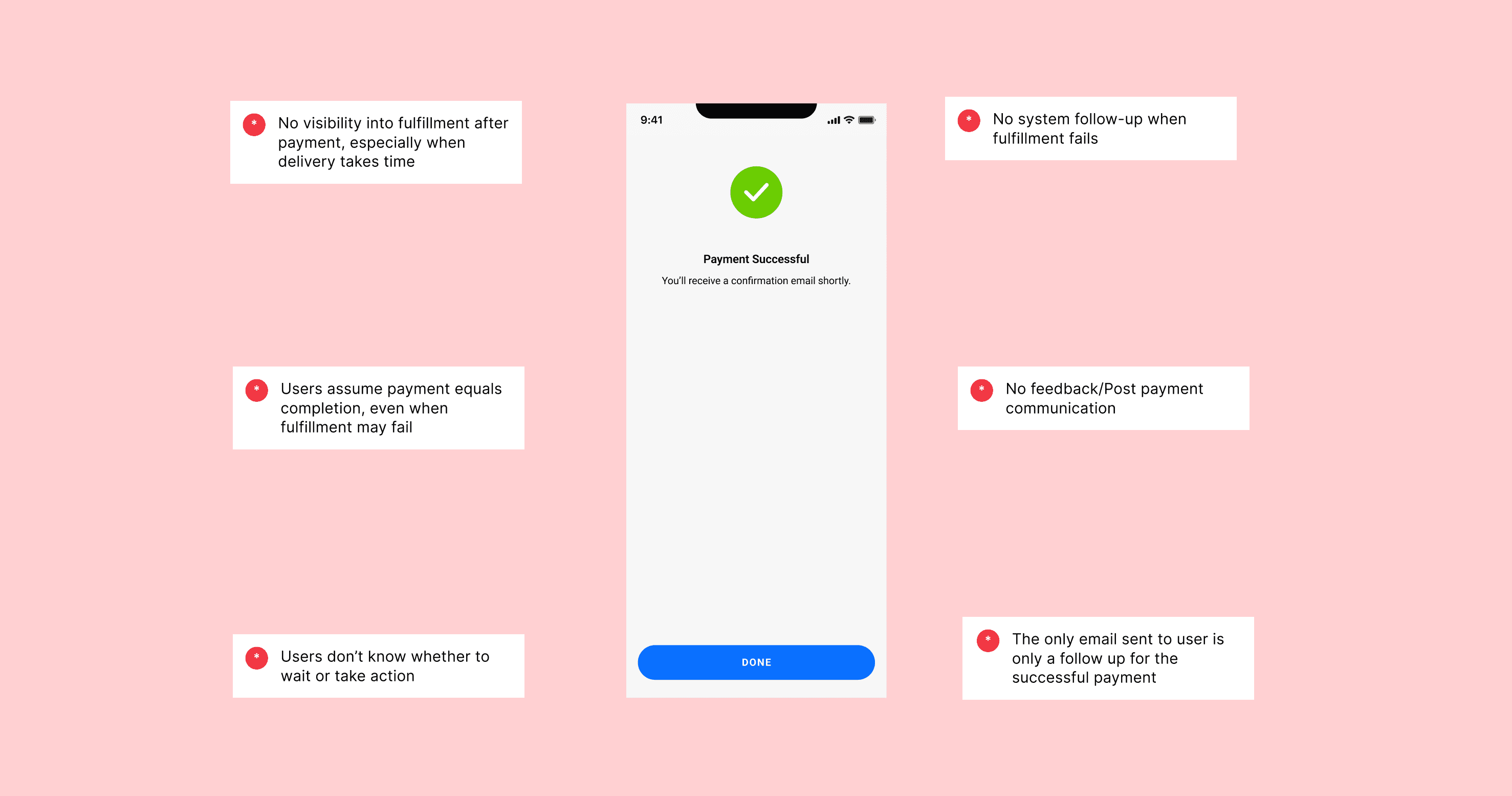
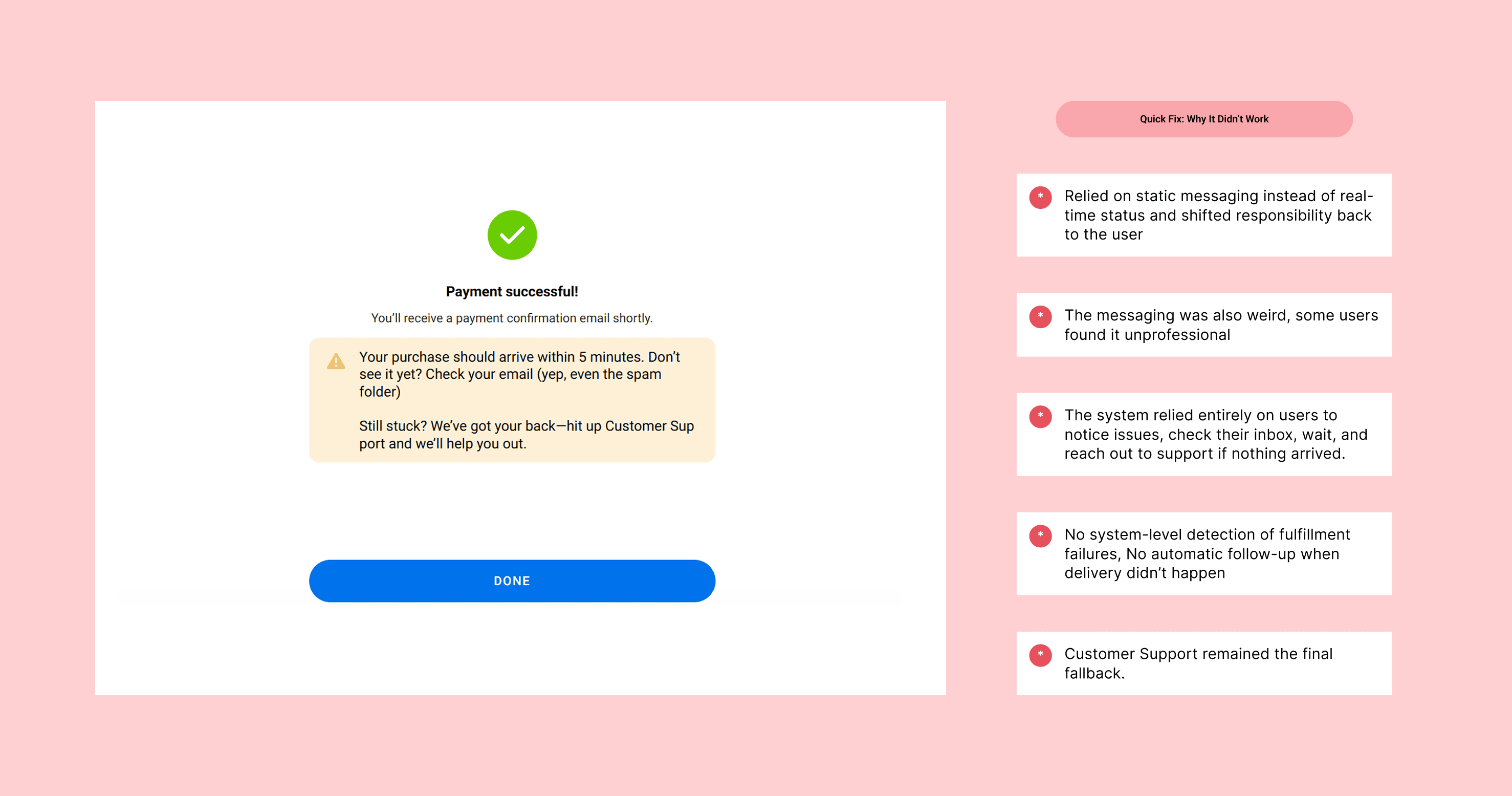
Out of 1.26 million paid orders, 10,364 failed after users had already been charged. The platform did not automatically respond to these failures, users were expected to notice the issue and contact support themselves.
Only 57.8% of affected users reported the problem, leaving thousands of users confused, frustrated, and without a clear resolution path. This led to:
Over 50 manual refund requests per day
Over 50 manual refund requests per day
45% churn among users who experienced failed fulfillment
45% churn among users who experienced failed fulfillment
Some App reviews flagged the platform as unreliable or fraudulent
Some App reviews flagged the platform as unreliable or fraudulent
The Strategy
Two clear opportunities emerged:
1. Make failures visible, not invisible
2. Recover before users complain
Design Goals
Help users clearly see what’s happening with their order, especially after payment
Help users clearly see what’s happening with their order, especially after payment
Spot failed orders early and fix them before users realize there’s a problem
Spot failed orders early and fix them before users realize there’s a problem
Resolve common issues in the product so users don’t have to contact support?
Resolve common issues in the product so users don’t have to contact support?
Key Design Decision (1)
Designing for Real-Time Visibility:
Designing for Real-Time Visibility:
Through early user interviews and competitive benchmarking, one insight stood out clearly:
Through early user interviews and competitive benchmarking, one insight stood out clearly:
Uncertainty caused more frustration than failure itself.
My Approach (1)
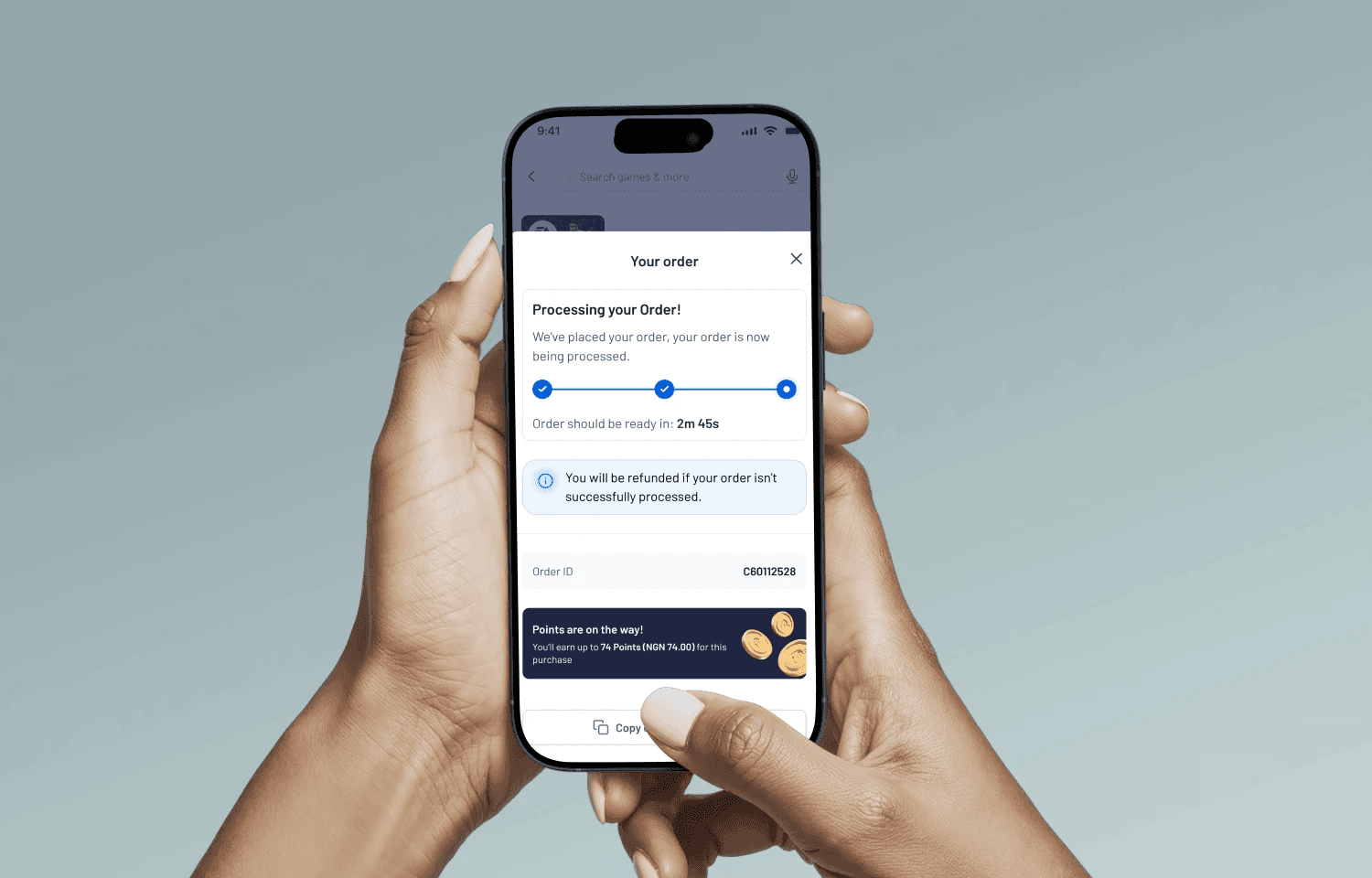
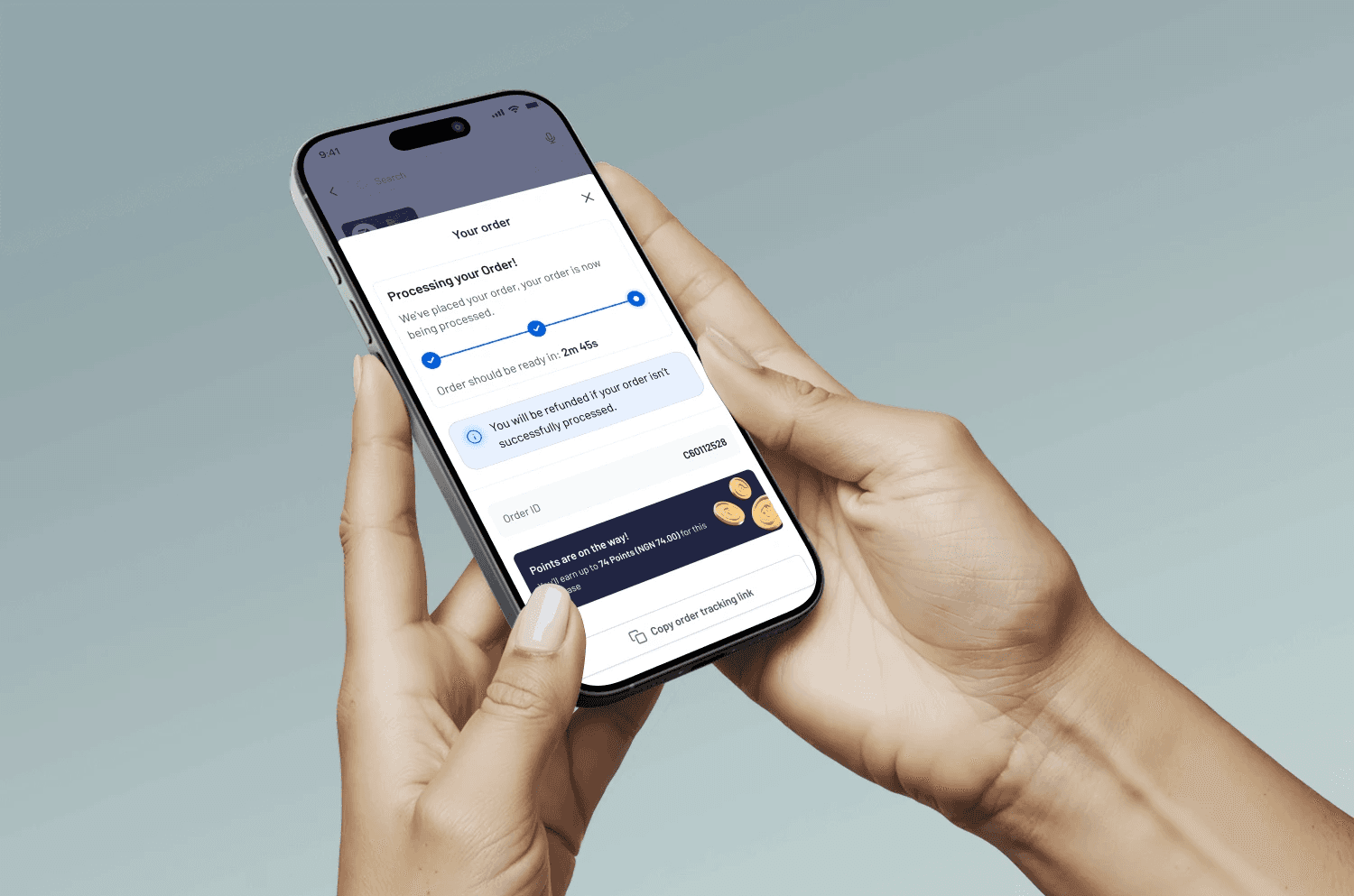
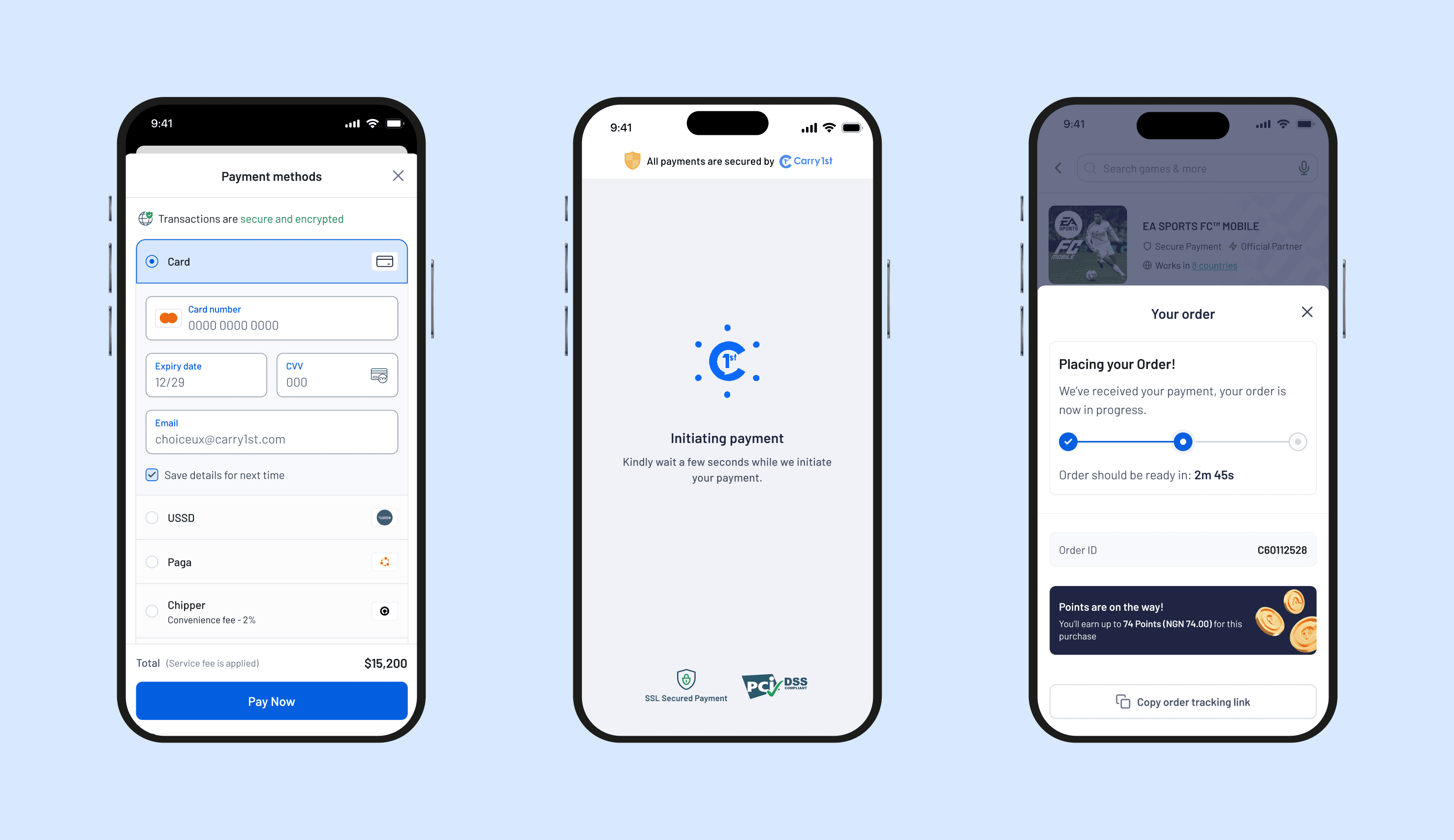
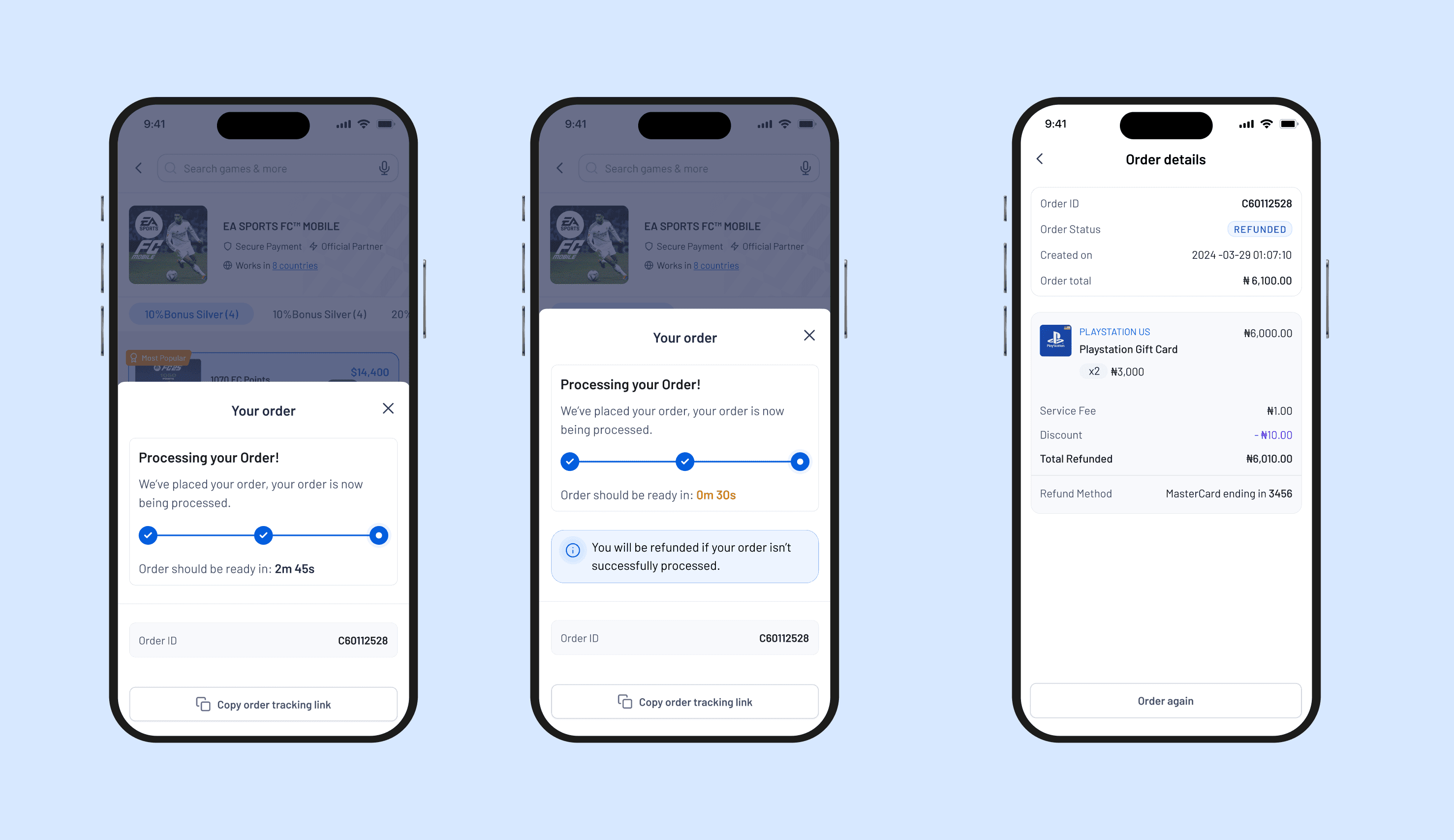
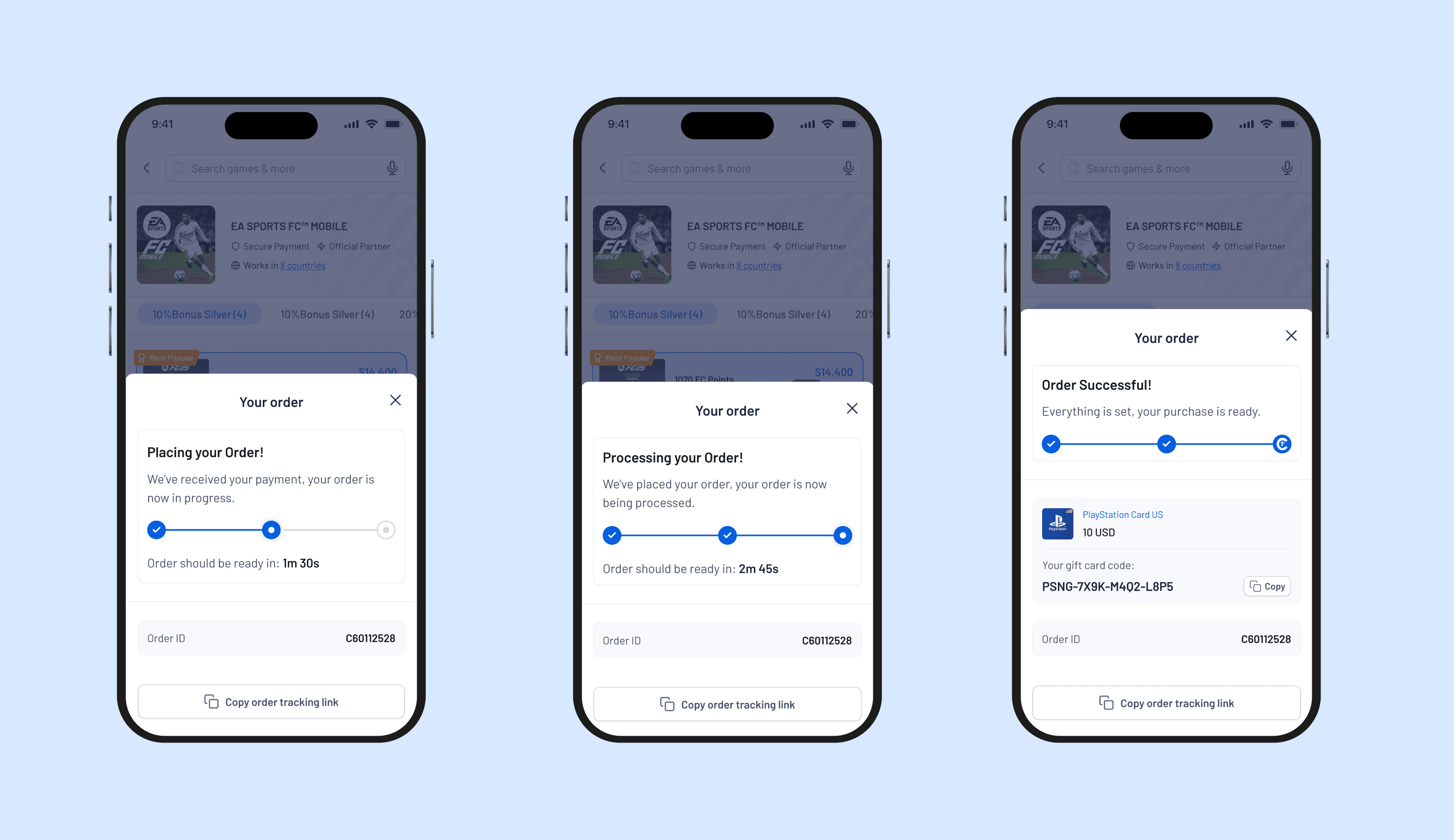
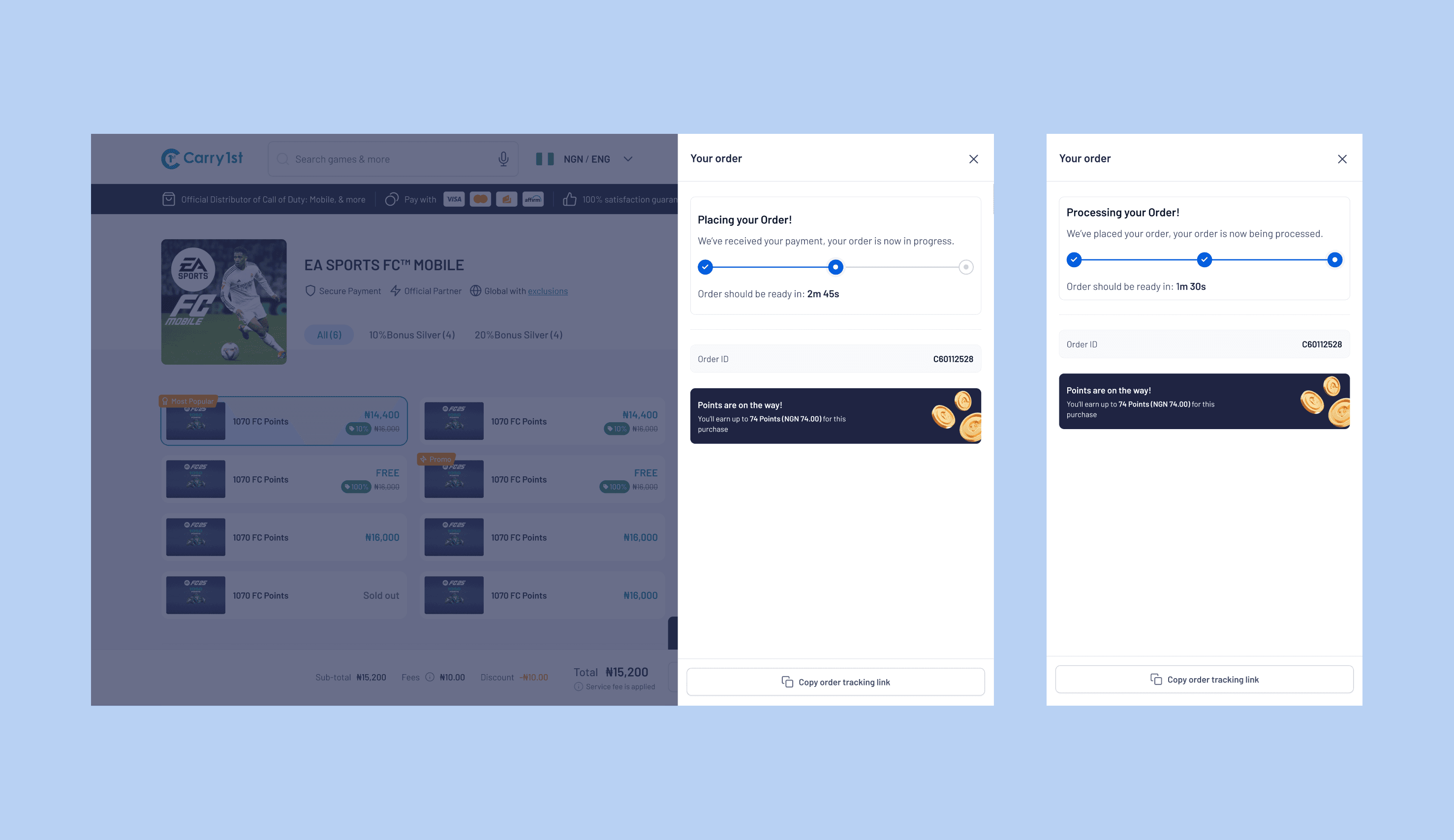
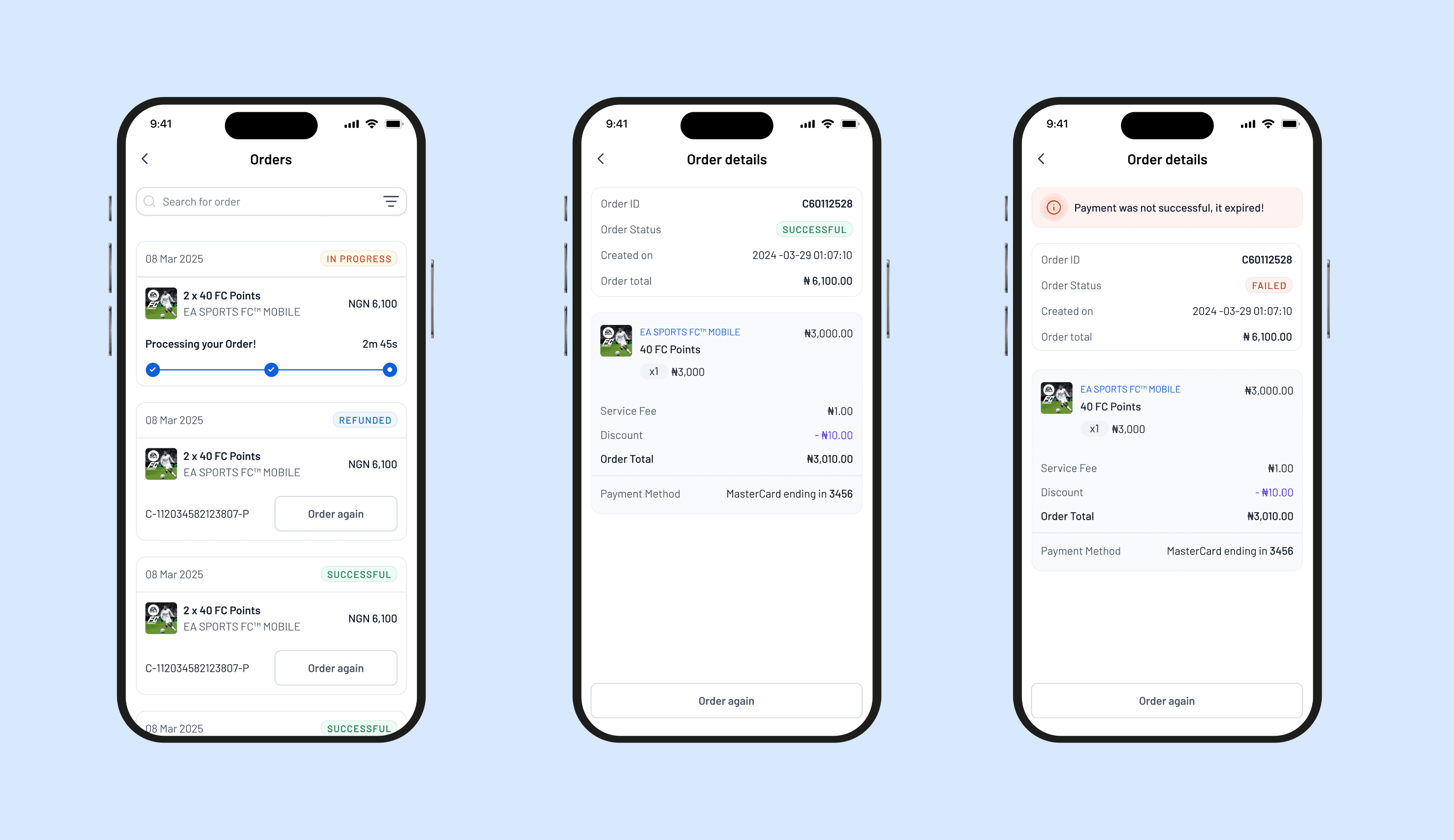
I designed the end-to-end fulfillment tracking experience to clearly communicate:
I designed the end-to-end fulfillment tracking experience to clearly communicate:
1. Current Order Status
3. What the system is doing next on the user’s behalf
2. The states and what they mean (Including failure)
Key Design Decision (2)
2. Designing for Proactive Recovery:
2. Designing for Proactive Recovery:
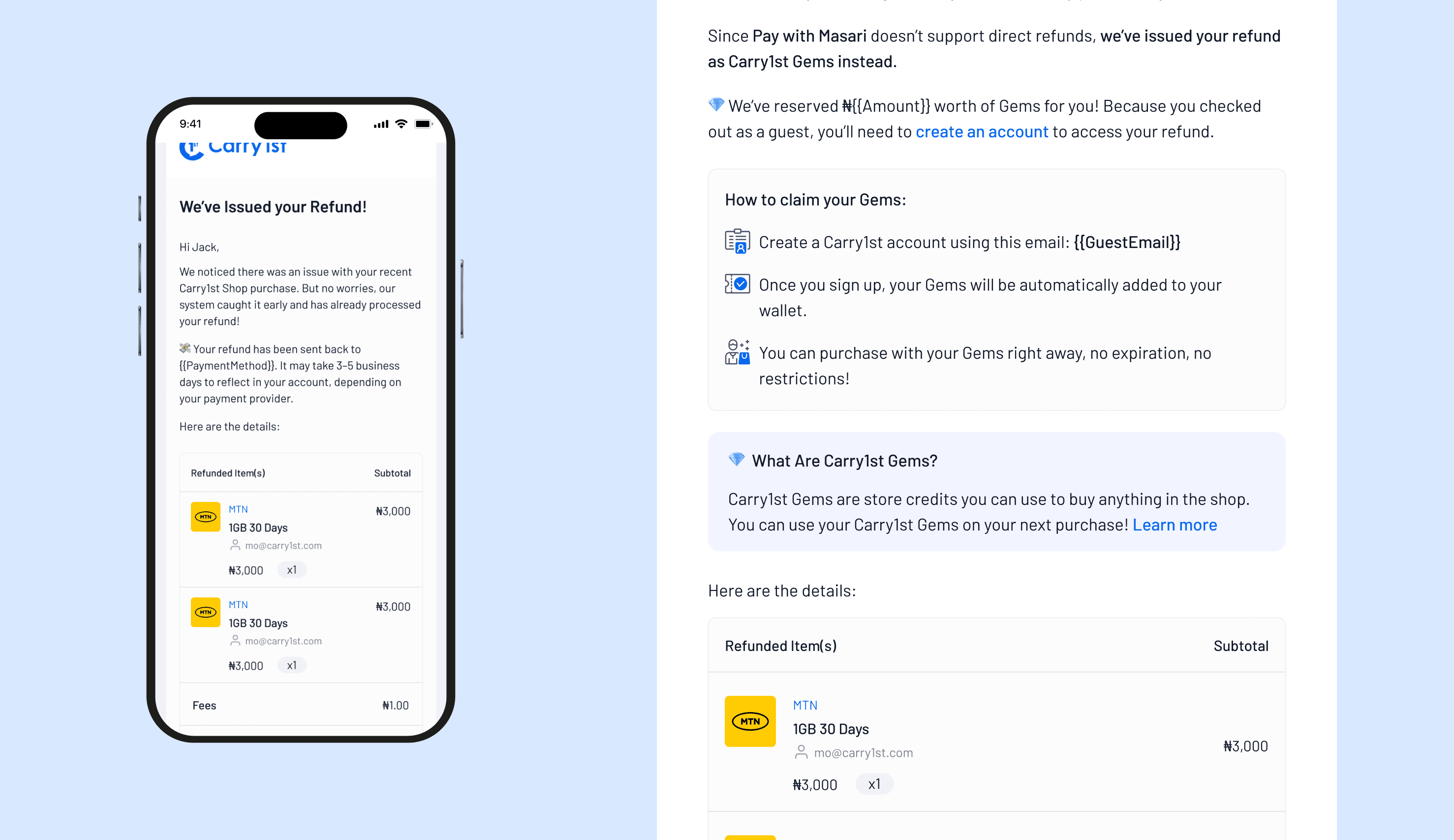
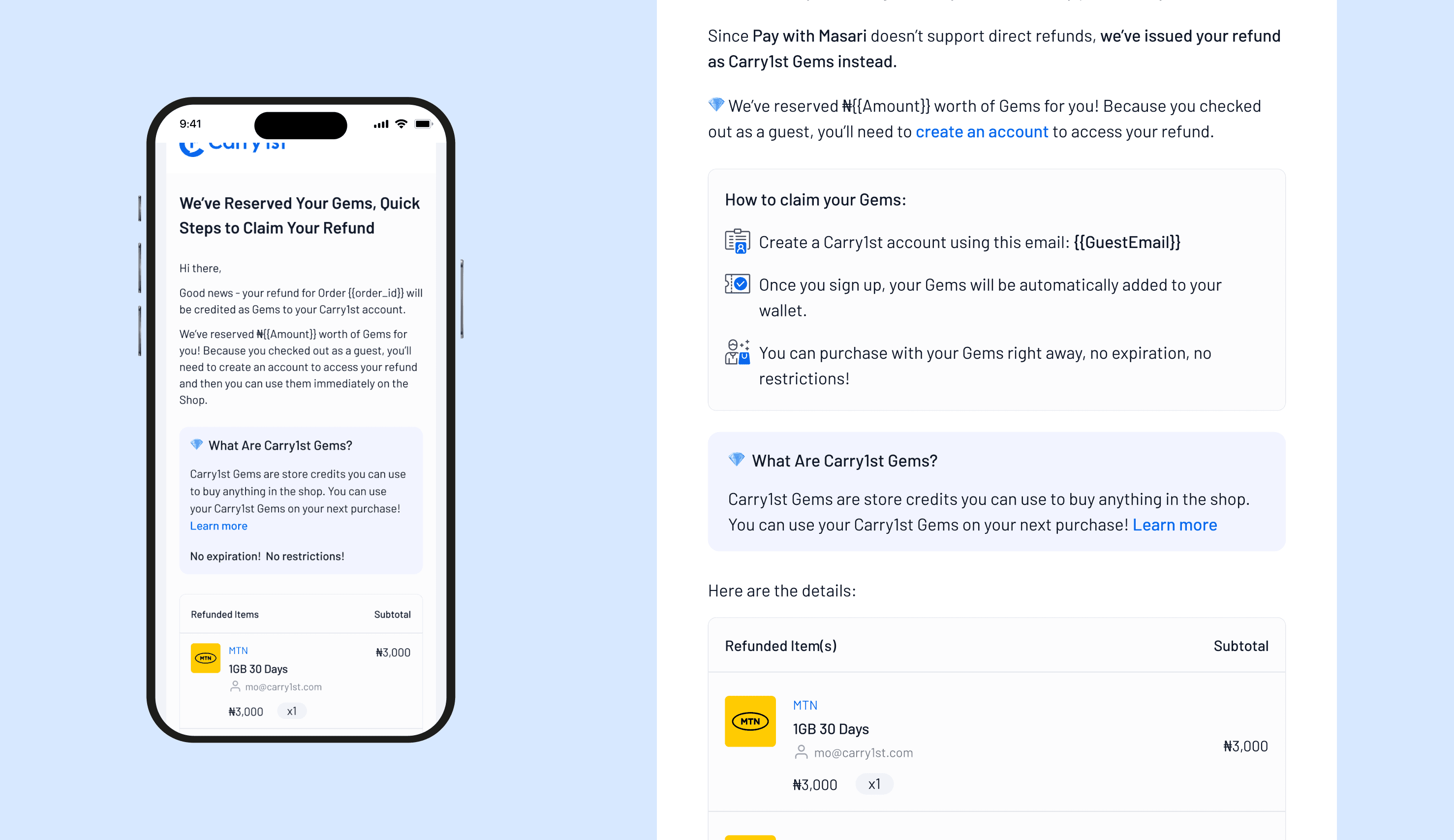
Next, I explored what happens after a failure is detected. Instead of waiting for users to reach out, we designed a system that:
Next, I explored what happens after a failure is detected. Instead of waiting for users to reach out, we designed a system that:
Initiates corrective actions immediately
Initiates corrective actions immediately
Notifies users via in-app messaging, email, and push notifications
Notifies users via in-app messaging, email, and push notifications
Guides users through the next steps without contacting support.
Guides users through the next steps without contacting support.
My Approach (2)
I catered for the designs that communicates next steps, shifting recovery from user-initiated to platform-led
I catered for the designs that communicates next steps, shifting recovery from user-initiated to platform-led
Takeaway
This project reinforced the importance of designing for failure, not just success.
By shifting responsibility from the user to the platform, we reduced friction, improved trust, and protected conversion in one of the most critical moments of the customer journey.
From the start, this project was designed to move both user trust metrics and core business KPIs.
While long-term metrics were still being tracked post-release, early signals showed:
55%
Reduction in Support Tickets
25%
Reduction in Month 1 churn
125%
Uplift in month 1 retention
38%
Reduction in refund requests within 6 weeks of launch
Resources that helped
Designing Effective Error States: Turning Frustration into Opportunity in 2025 UX
Don't Make me Think
Principles of UX

Mihail
Lead PM
“Working with Choice on this project made a huge difference. She really understood the problem beyond just screens and kept pushing for clarity when things broke. When failed orders started causing issues, she was always thinking about how users would feel and what the product should do before support even got involved.”
Morakinyo
Lead Designer
“Choice took ownership of the problem and didn’t just design for the happy path. She focused on moments where users were confused or frustrated and pushed for solutions that actually reduced support load. The recovery experience we shipped was much stronger because of her input.”
Shiraaz
Head of Engineering
“Choice was very easy to work with from an engineering standpoint. Her designs were clear, practical, and thought through. She always considered edge cases, which saved us a lot of back-and-forth during implementation, especially around failure and recovery flows.”
Mihail
Lead PM
“Working with Choice on this project made a huge difference. She really understood the problem beyond just screens and kept pushing for clarity when things broke. When failed orders started causing issues, she was always thinking about how users would feel and what the product should do before support even got involved.”
Morakinyo
Lead Designer
“Choice took ownership of the problem and didn’t just design for the happy path. She focused on moments where users were confused or frustrated and pushed for solutions that actually reduced support load. The recovery experience we shipped was much stronger because of her input.”
Shiraaz
Head of Engineering
“Choice was very easy to work with from an engineering standpoint. Her designs were clear, practical, and thought through. She always considered edge cases, which saved us a lot of back-and-forth during implementation, especially around failure and recovery flows.”
Mihail
Lead PM
“Working with Choice on this project made a huge difference. She really understood the problem beyond just screens and kept pushing for clarity when things broke. When failed orders started causing issues, she was always thinking about how users would feel and what the product should do before support even got involved.”
Morakinyo
Lead Designer
“Choice took ownership of the problem and didn’t just design for the happy path. She focused on moments where users were confused or frustrated and pushed for solutions that actually reduced support load. The recovery experience we shipped was much stronger because of her input.”
Shiraaz
Head of Engineering
“Choice was very easy to work with from an engineering standpoint. Her designs were clear, practical, and thought through. She always considered edge cases, which saved us a lot of back-and-forth during implementation, especially around failure and recovery flows.”
Next Project