Communication
Feb 25, 2025
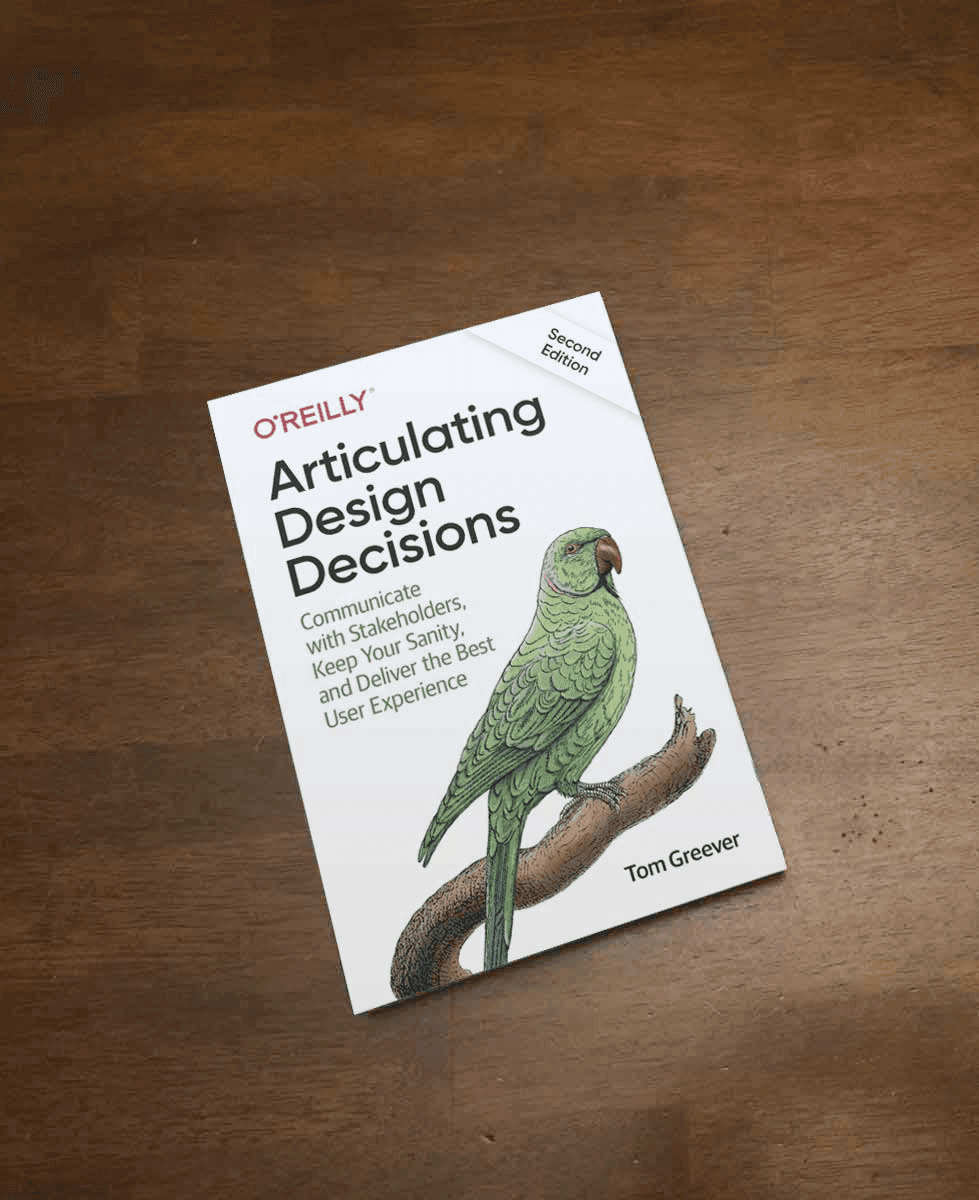
I read Articulating Design Decisions very early in my design career, and it fundamentally shaped how I approach design conversations to this day.
At a stage where it’s easy to over-index on visual quality or tool proficiency, this book introduced a more durable skill: the ability to clearly explain why a design exists. It reframed design reviews from moments of defense into opportunities for shared understanding; grounded in user needs, constraints, trade-offs, and intent.
What stood out most was the emphasis on structure. By leading with the problem, clarifying assumptions, and openly discussing alternatives, design feedback becomes less subjective and more productive. This way of communicating has proven especially valuable in real-world environments where data is imperfect, timelines are tight, and multiple stakeholders bring strong opinions to the table.
Over time, this mindset scales beyond individual projects. It builds trust with product, engineering, and leadership teams. It reduces friction. And it helps design move from being perceived as execution-focused to being seen as a strategic partner.
For mentees and designers earlier in their journey, this book offers more than communication tips — it provides a framework for professional maturity. Visual skills may get you noticed, but the ability to articulate decisions is what allows your work to be understood, defended, and ultimately shipped with impact.