Designing Payments for High Volume Platforms
Overview
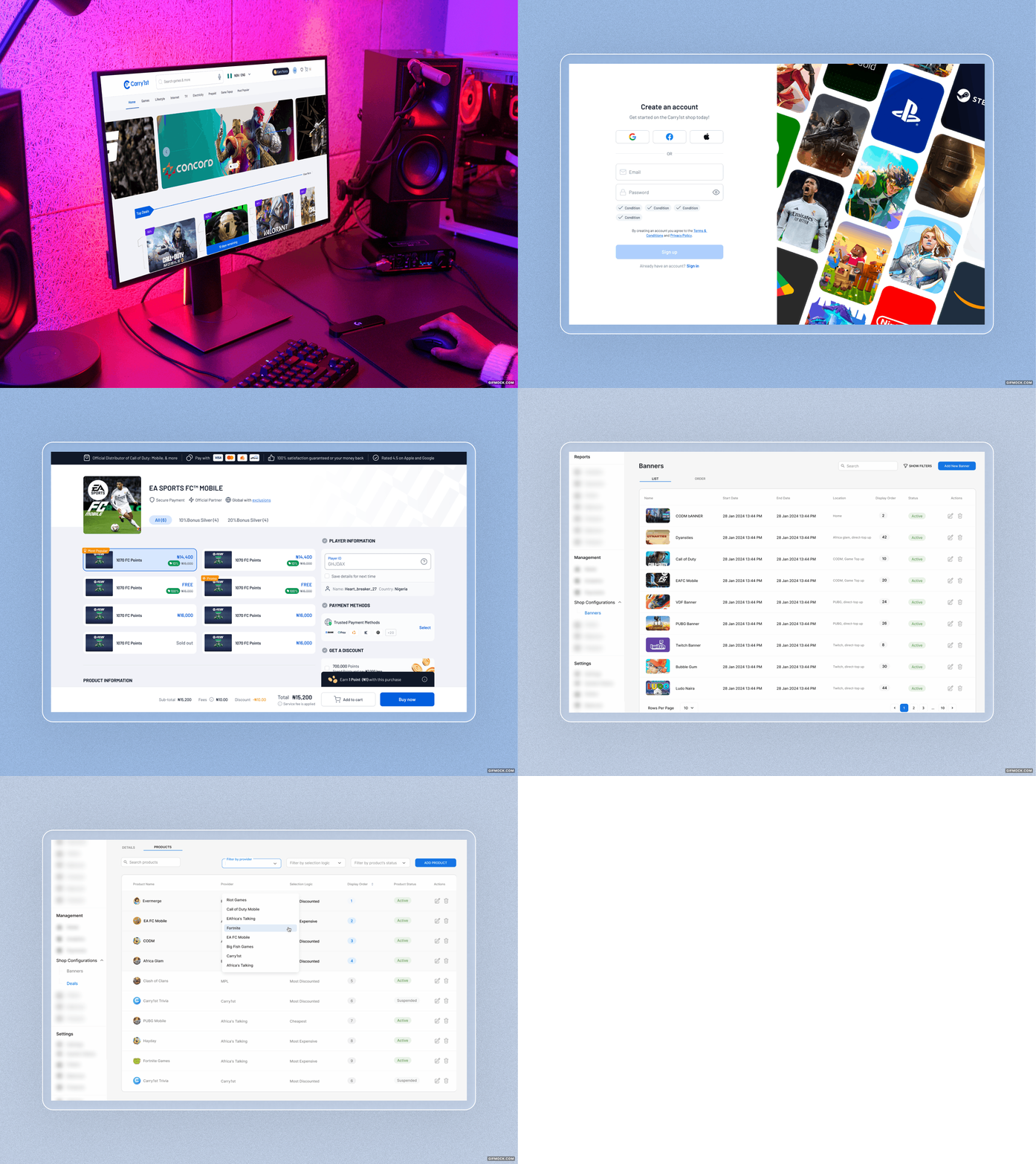
As Pay1st scaled across Africa and MENA shop users while onboarding new payment partners, payments became a major growth bottleneck. I led the redesign of a unified payments flow serving Carry1st Shop and 2M+ users across partners like Call of Duty, Riot Games, and Garena ; simplifying flows and reducing redirection.
Categories
Payment UX
Platform Systems
Team
1x Product Designer, 1x Product Manager, 4x Software Engineers, 2x Pay Ops, Partners (Riot, Garena)
Timeline
12 weeks (Discovery → Design → Iteration → Handoff)
Platform
Web (mobile responsive), iOS, Android
My Role
UX Research, Interviews, End-to-end UX, Admin tooling, Payment communications
48%
Increase in success rate
65%
Reduction in avg. task time
88%
Reduction in error during checkout
37%
Drop in bounce rate
The Strategy
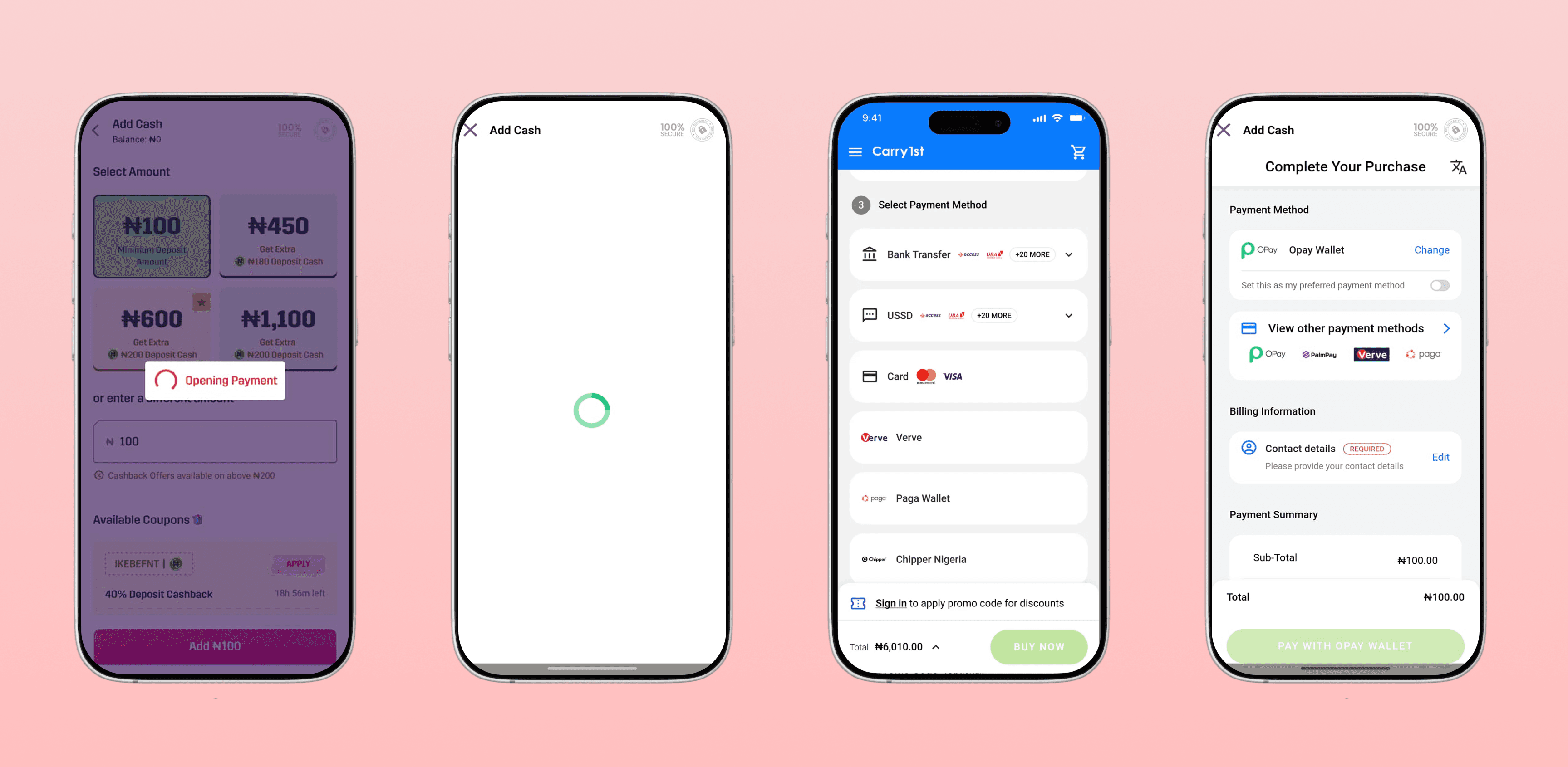
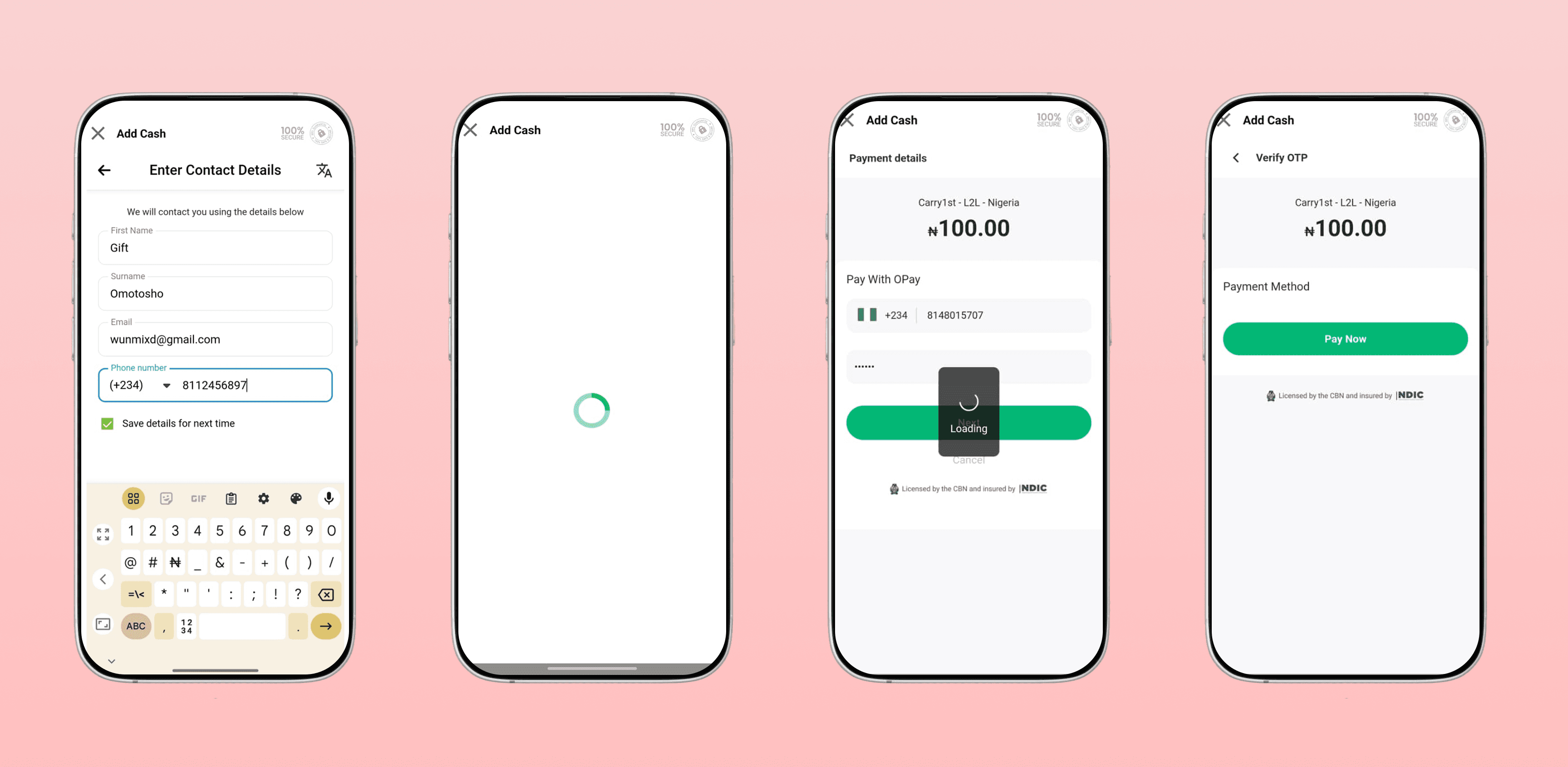
One core issue, two surfaces. Across both Carry1st Shop and Partner's payments, users dropped off after selecting a payment method and entering details.
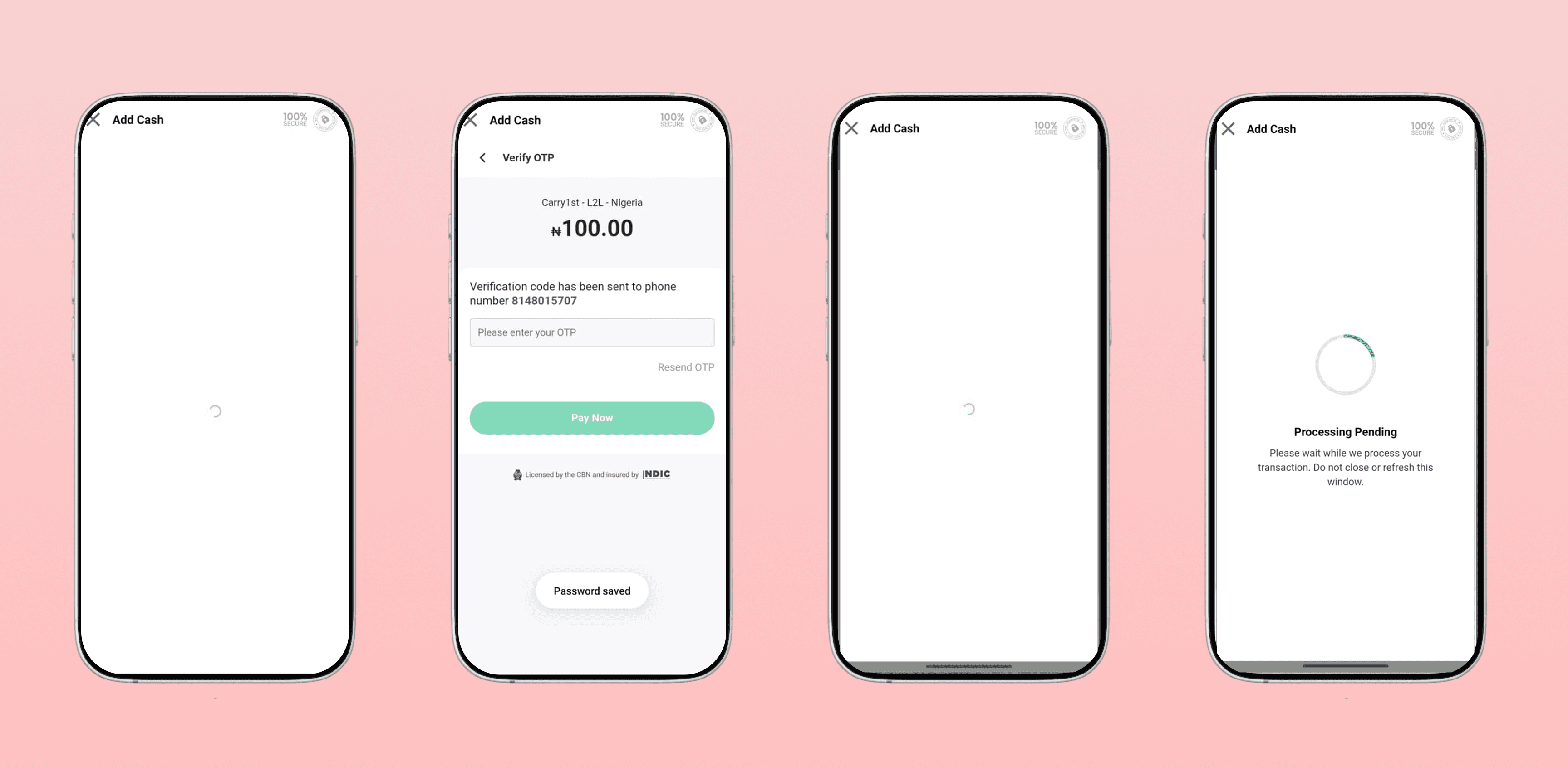
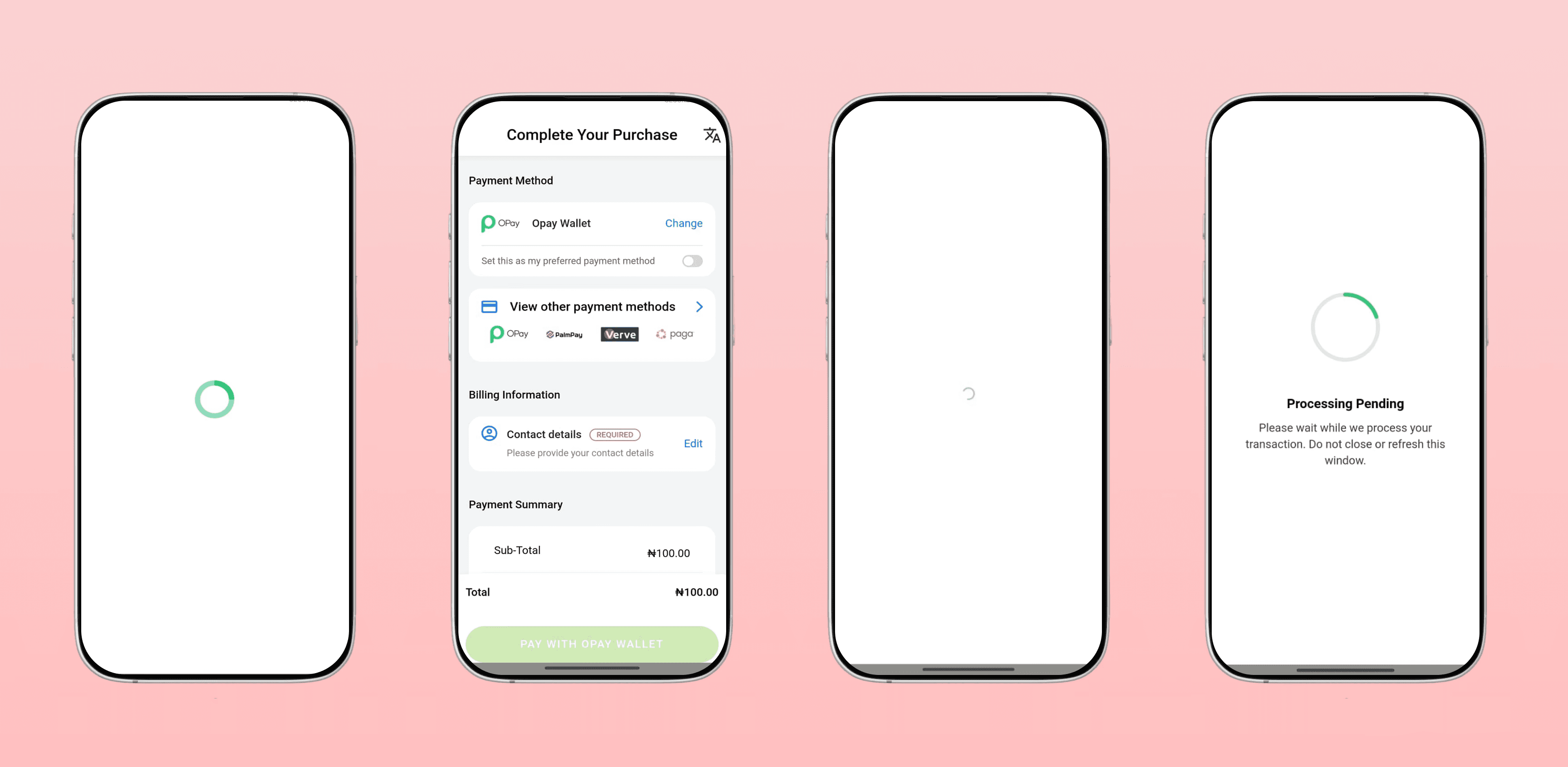
On Partner's payments
Over the last year, as millions of partner transactions flowed through our hosted checkout, we noticed a consistent and costly pattern:
From the user and partner's interview (Riot and Garena) interviews, usability reviews, and session analysis I conducted, the causes became very clear:
Too many steps
Full-page redirects for every flow
On Shop's Checkout
At the same time, similar issues surfaced on the Carry1st's consumer side. As the Shop expanded, users were discovering products and selecting payment methods; but nearly half never completed checkout.
User interviews were conducted with 20 users across Africa and MENA including 14 users who had made 0 to 2 purchases on the Shop and 6 frequent users.
Fragmented One-Page Checkout Increased Drop-offs
High Cognitive Load at Checkout Slowed Conversions
Unclear Next Steps After Payment Method Selection
Misleading CTA & Broken Payment Expectations
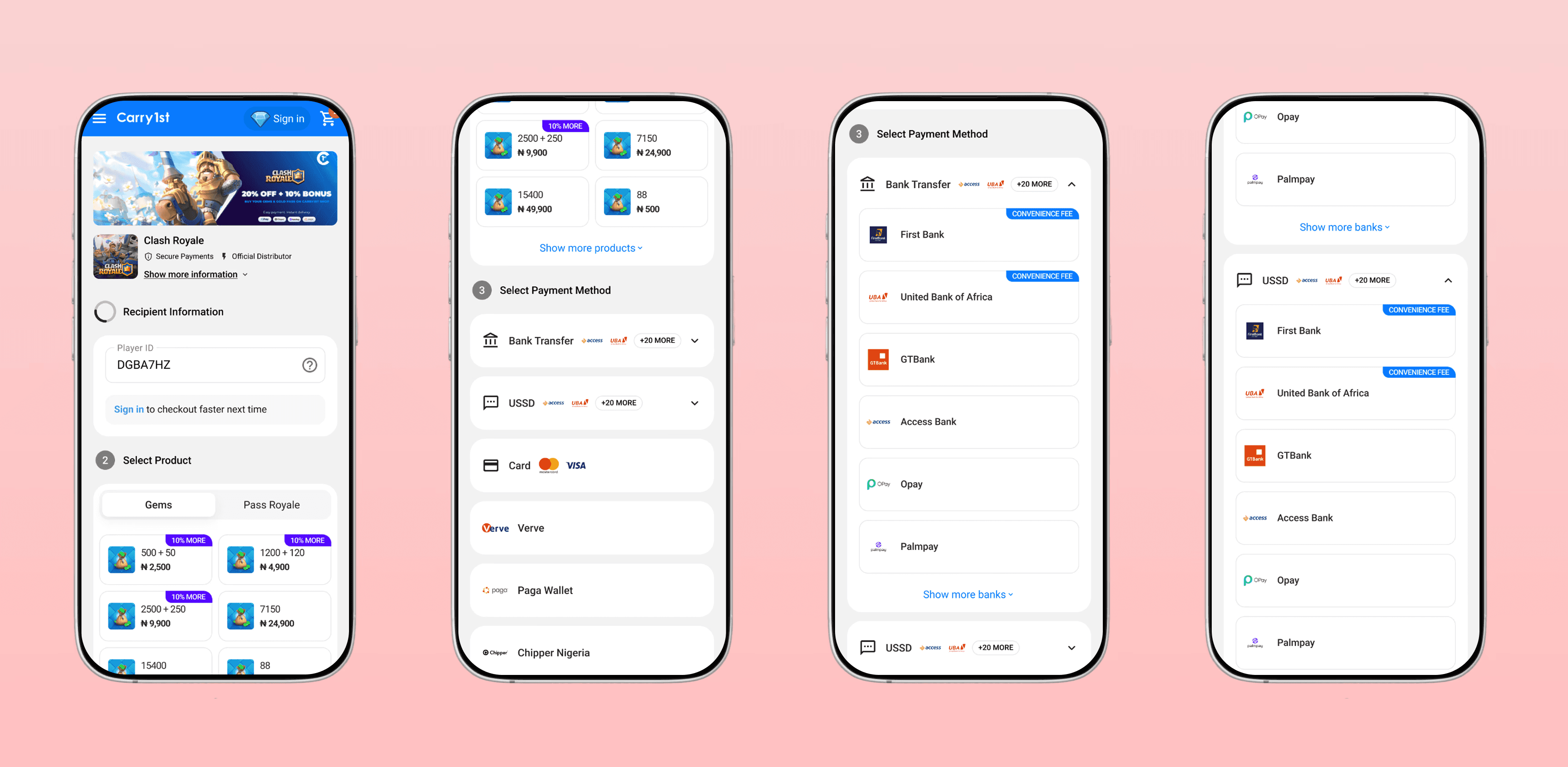
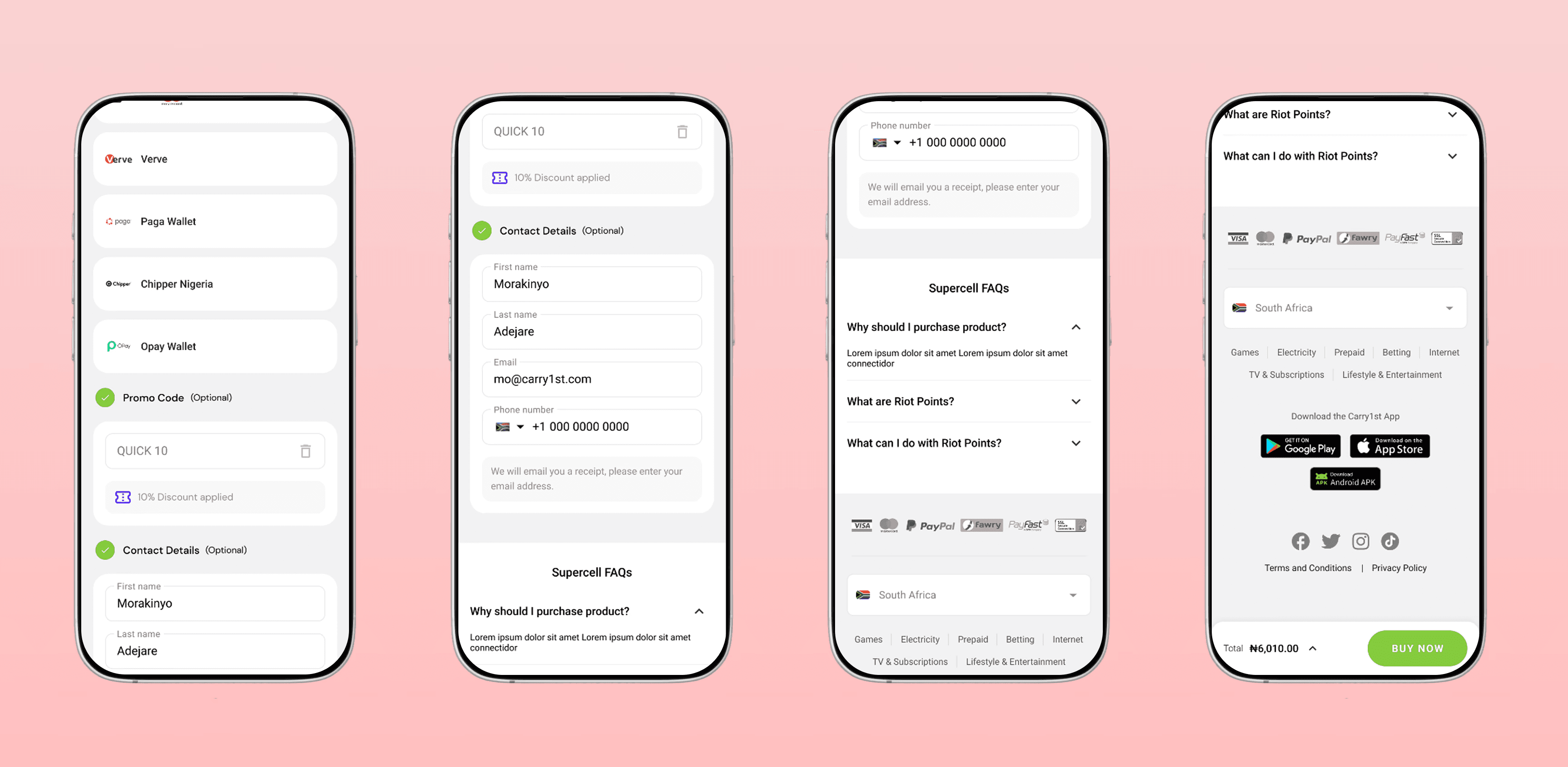
Critical Issues shared
Although redirection losses were higher on partner payments, Shop checkouts suffered similar issues. Drop-offs clustered in steps 2–3 due to repeated steps, re-entering details, and being sent to unfamiliar external pages without context; often after users had already navigated a long checkout flow.
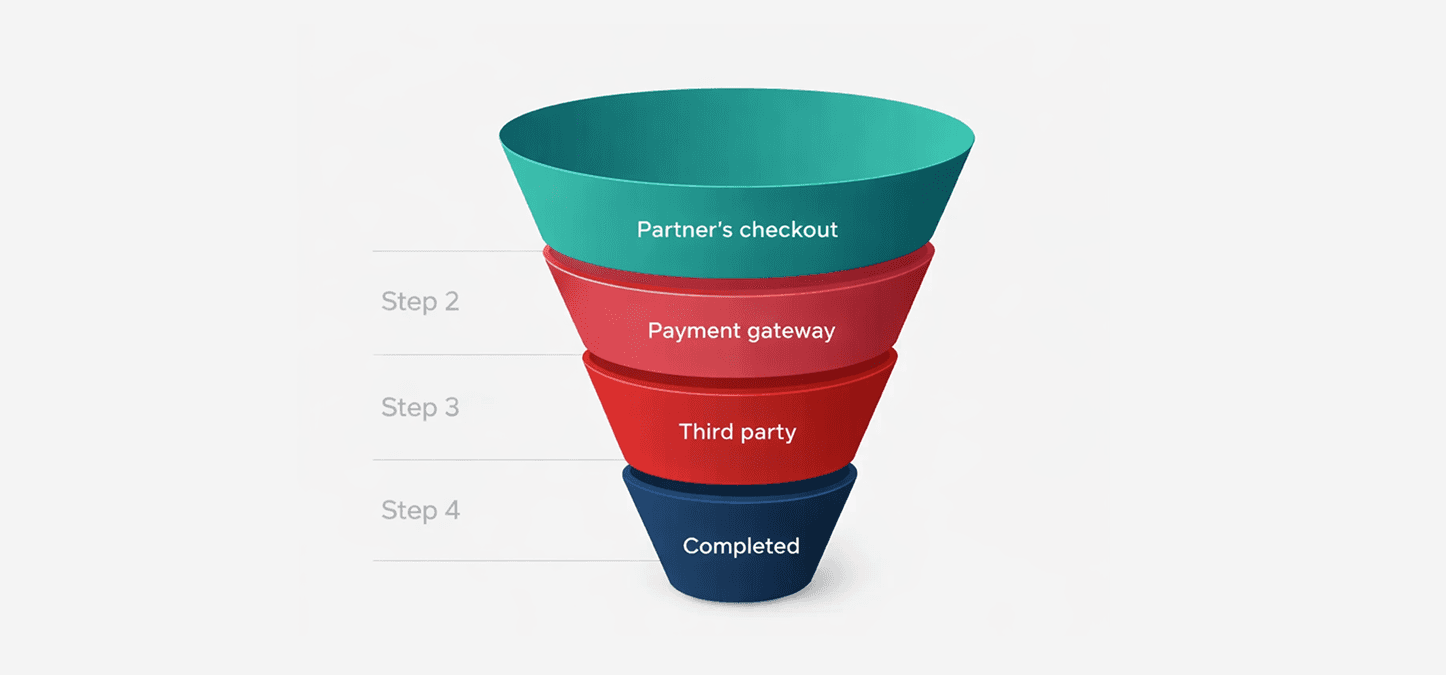
These pain points were also consistently shared across partner, Shop, and PayOps interviews.
Weak Trust Signals
High operational overhead
Confusing payment instructions
Poor payments/Error messaging
Design Goals/key questions
How might we…
How this was informed
This work was informed by data, session and funnel analysis, usability reviews, and user interviews across Nigeria, Morocco, Kenya, and Egypt; alongside internal and partner team interviews with Carry1st, Riot, MPL, and Garena.
Key Decision 1
Why: Users were overwhelmed by too many inputs, decisions, and messages at once especially new users and mobile users.
Outcome: Reduced hesitation, fewer back-and-forth interactions, and faster completion across both flows.
What changed:
1 a. Simplified and Reordered the Checkout Structure
1 b. Introduced a Focused Payment Step
Key Decision 2
Reducing Steps, Redirection & Payment Fragmentation: Minimize unnecessary steps and eliminate avoidable redirects across all payment flows.
Why: ~30% of transactions were lost due to redirection alone. Users also reported friction from repeated steps such as entering card details and billing info across multiple pages.
Outcome: 40% more conversion: Fewer exits, higher completion time.
2 a. Reduced repeated data entry across flows
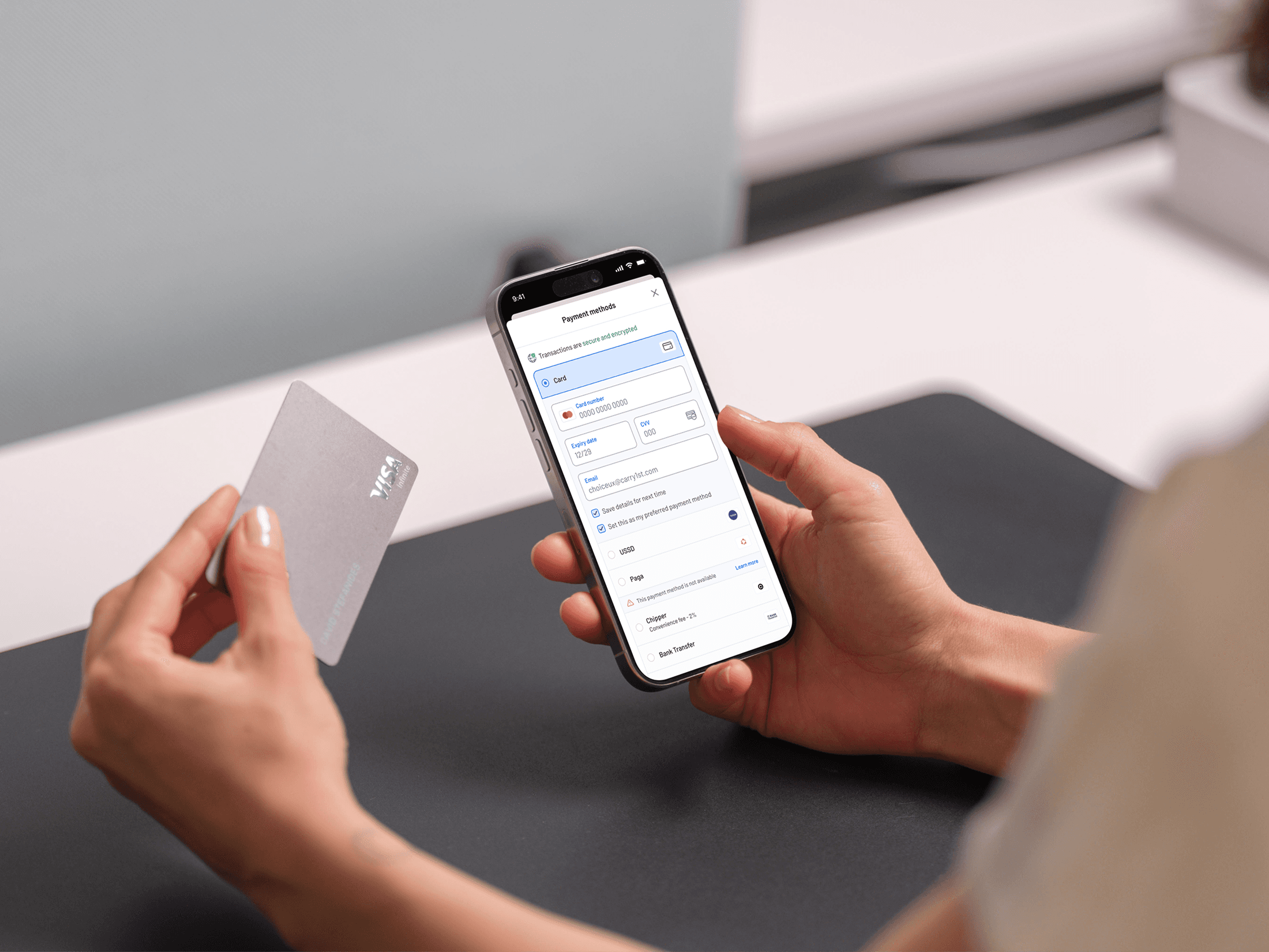
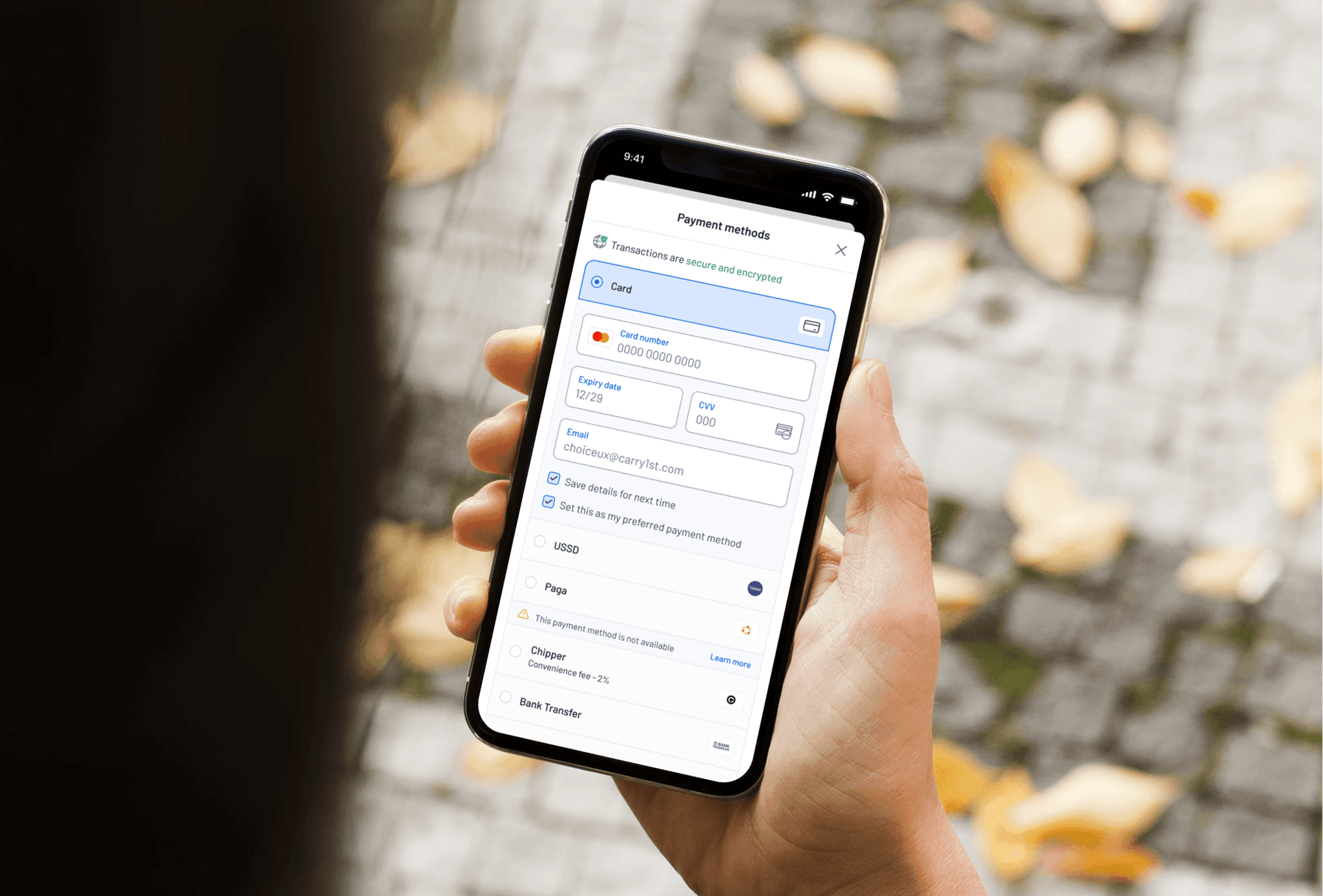
2 b. Introduced embedded payment flows
Key Decision 3
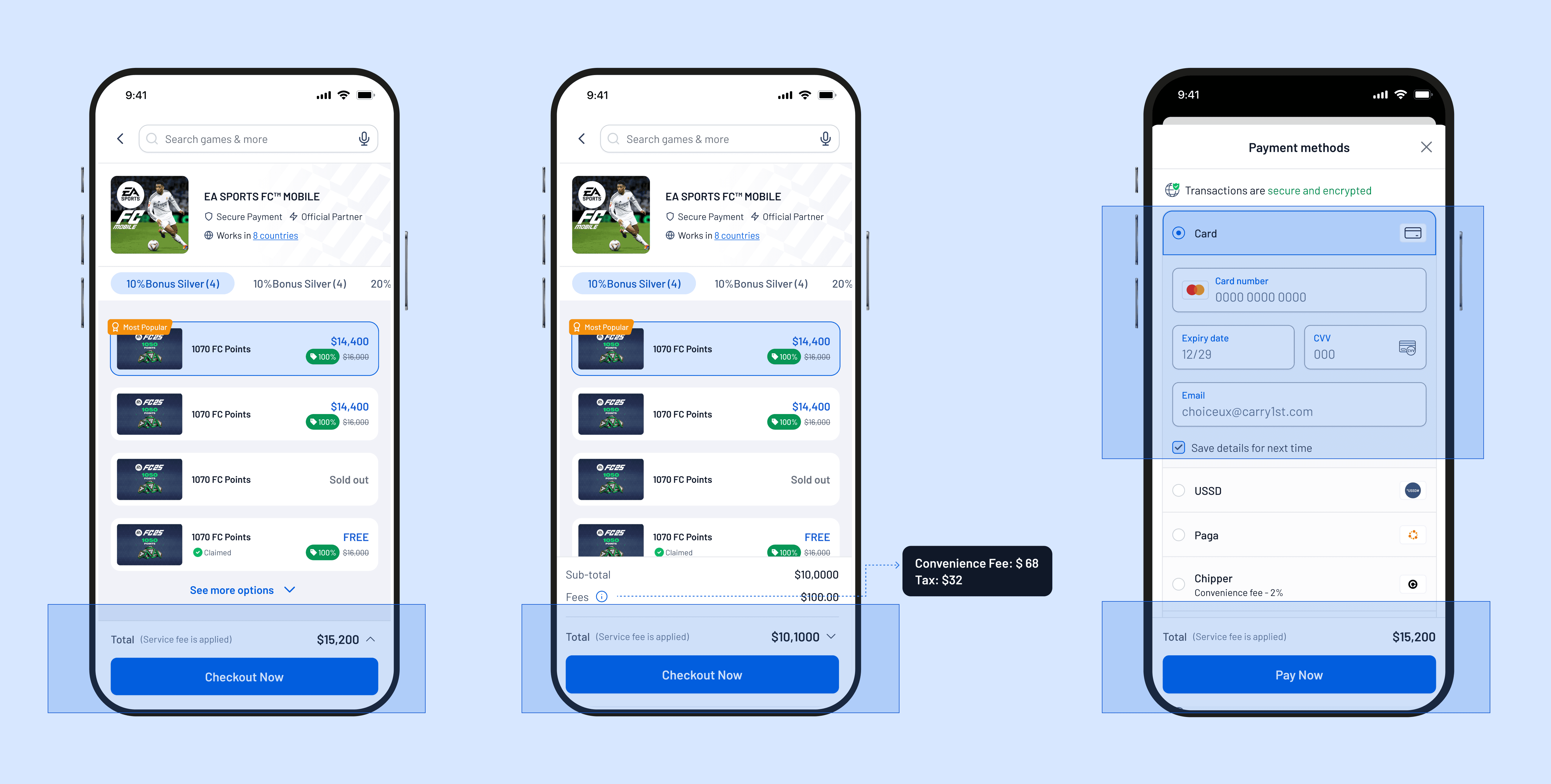
3. Mobile-First Optimization: Design mobile-first by default, not as a responsive afterthought
Why: 70–80% of transactions happened on mobile, yet mobile users had the highest abandonment especially during redirections and dense checkout moments.
Outcome: Significant drop in mobile abandonment and improved completion.
3 a. Removed Long vertical scrolling
3 b. Progressive Forms Reveal and Sticky CTAs
Key Decision 4
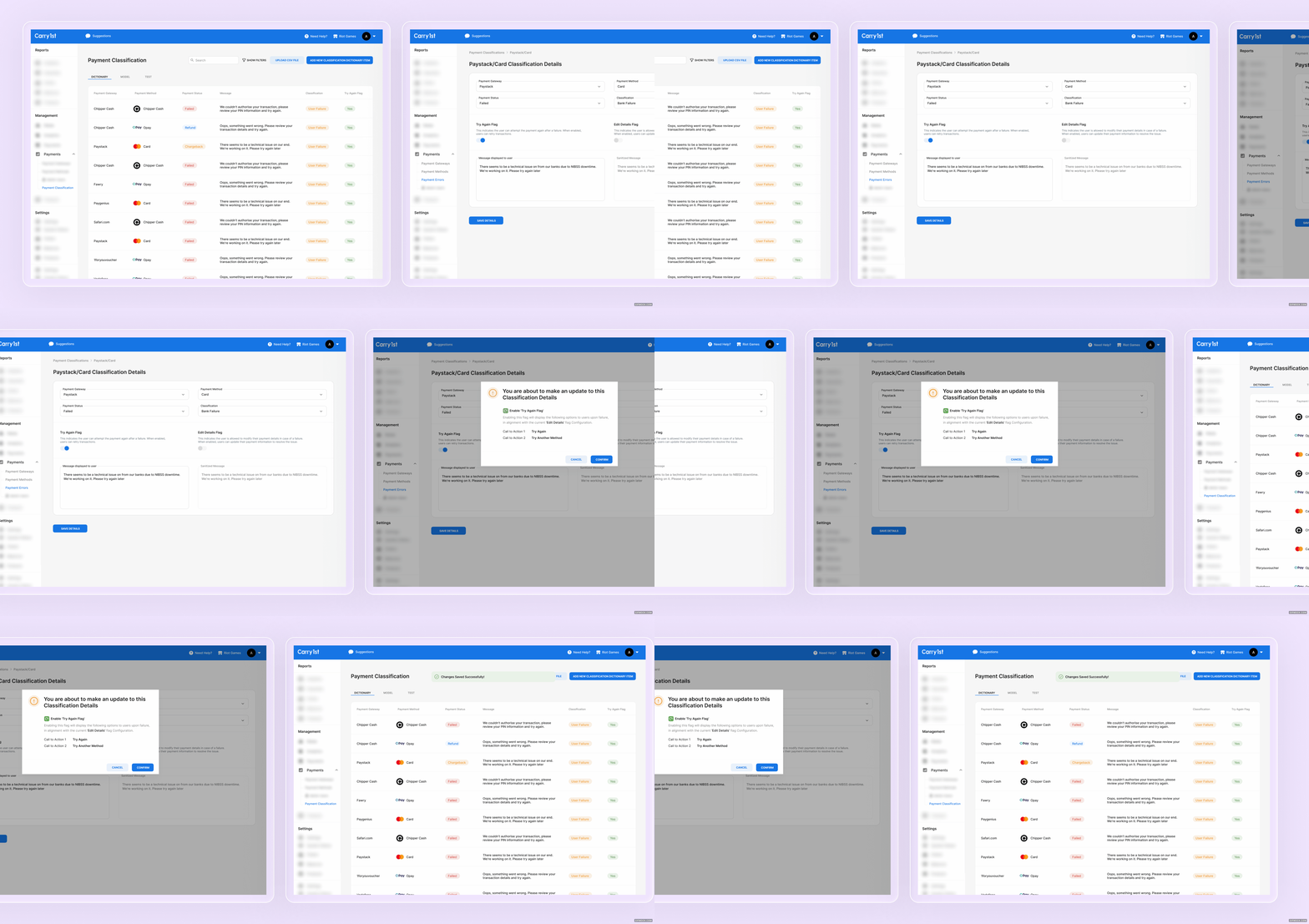
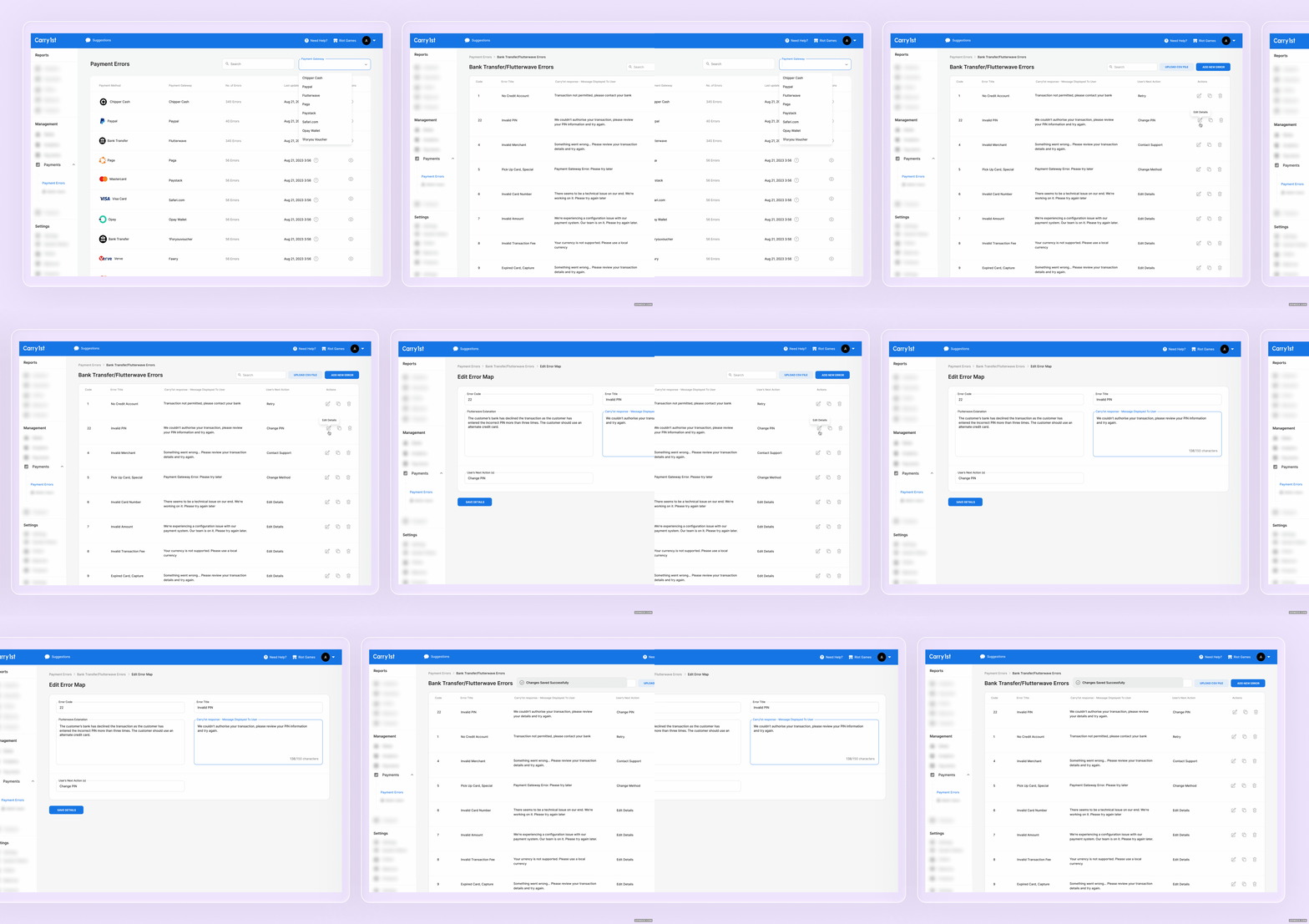
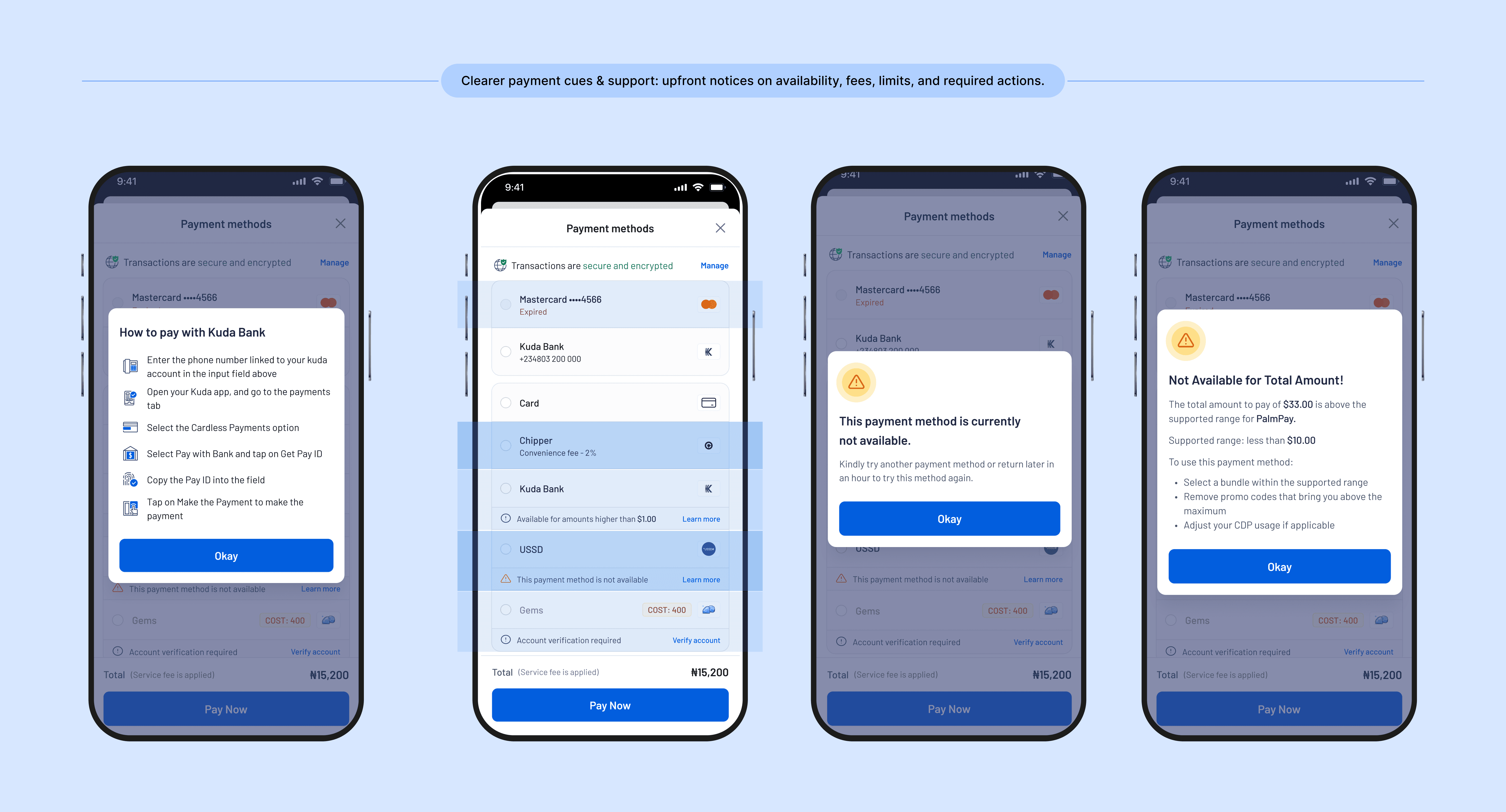
Error Prevention & Instant Recovery: Design errors as recoverable states not dead ends.
Why: Users repeatedly retried payments with the same incorrect details, while missing method availability, fee, or limit cues caused guaranteed failures.
Outcome: Massive reduction in repeated failures, retries, and abandonment during error states.
4 a. API-level detection of user vs system errors
4 c. Reviewed all error mappings
4 e. Kept CTAs always active
4 b. Error classification with recovery actions
4 d. Configurable error messaging (No Engineering)
4 f. Method limits & downtime notice
Micro-interactions and Motion
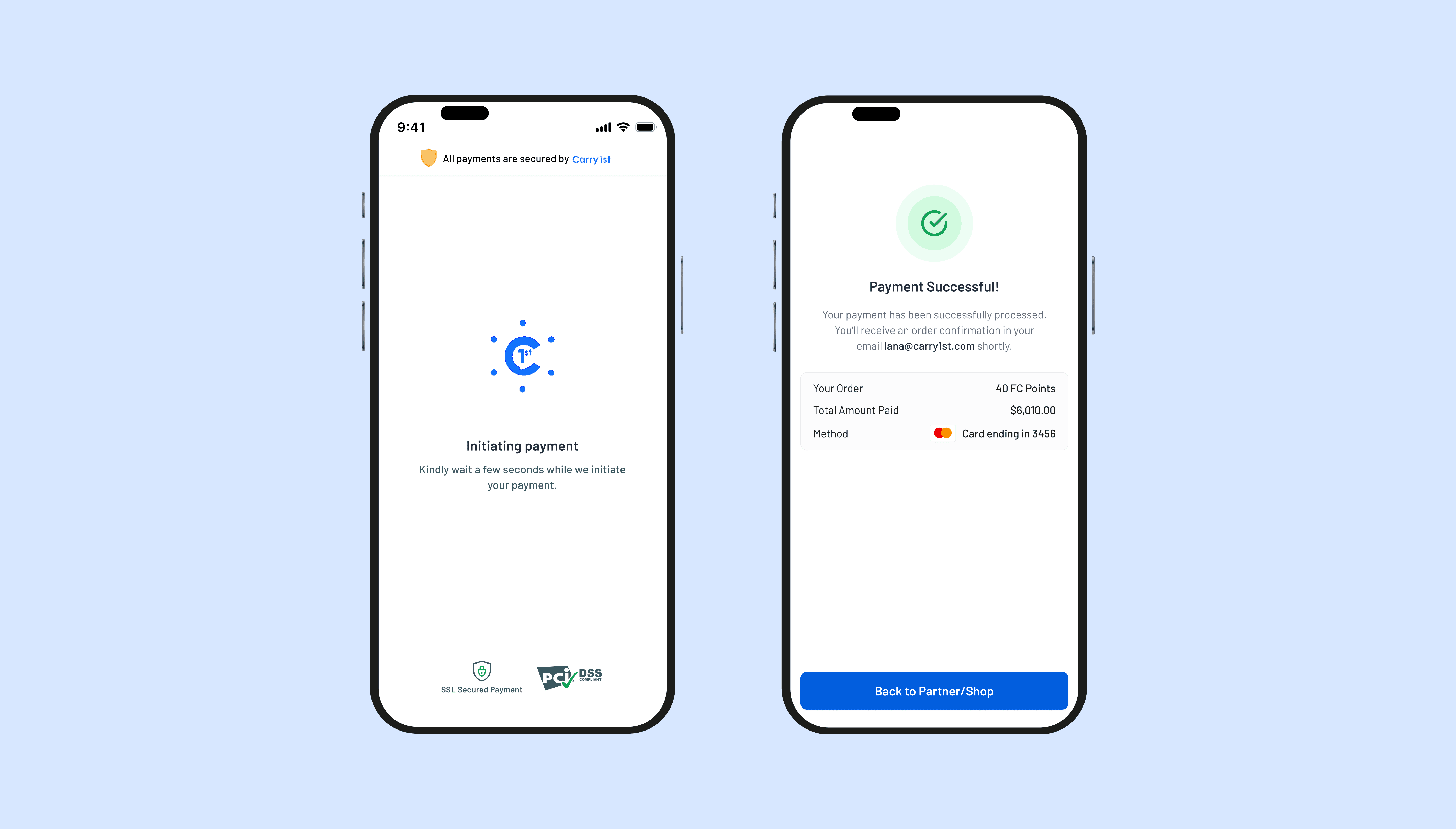
Motion in this project had a specific job at every high-anxiety moment in the flow.
Loading states communicated active processing, not just waiting; stopping users from re-tapping and triggering duplicate transactions.
Error transitions were calm and deliberate, guiding the eye to the recovery action rather than the failure. The confirmation animation was designed to feel conclusive, reducing the anxiety-driven support contacts from users unsure whether their payment had gone through.
Every motion decision was validated through session recordings and usability testing before rollout.
Key Decision 5
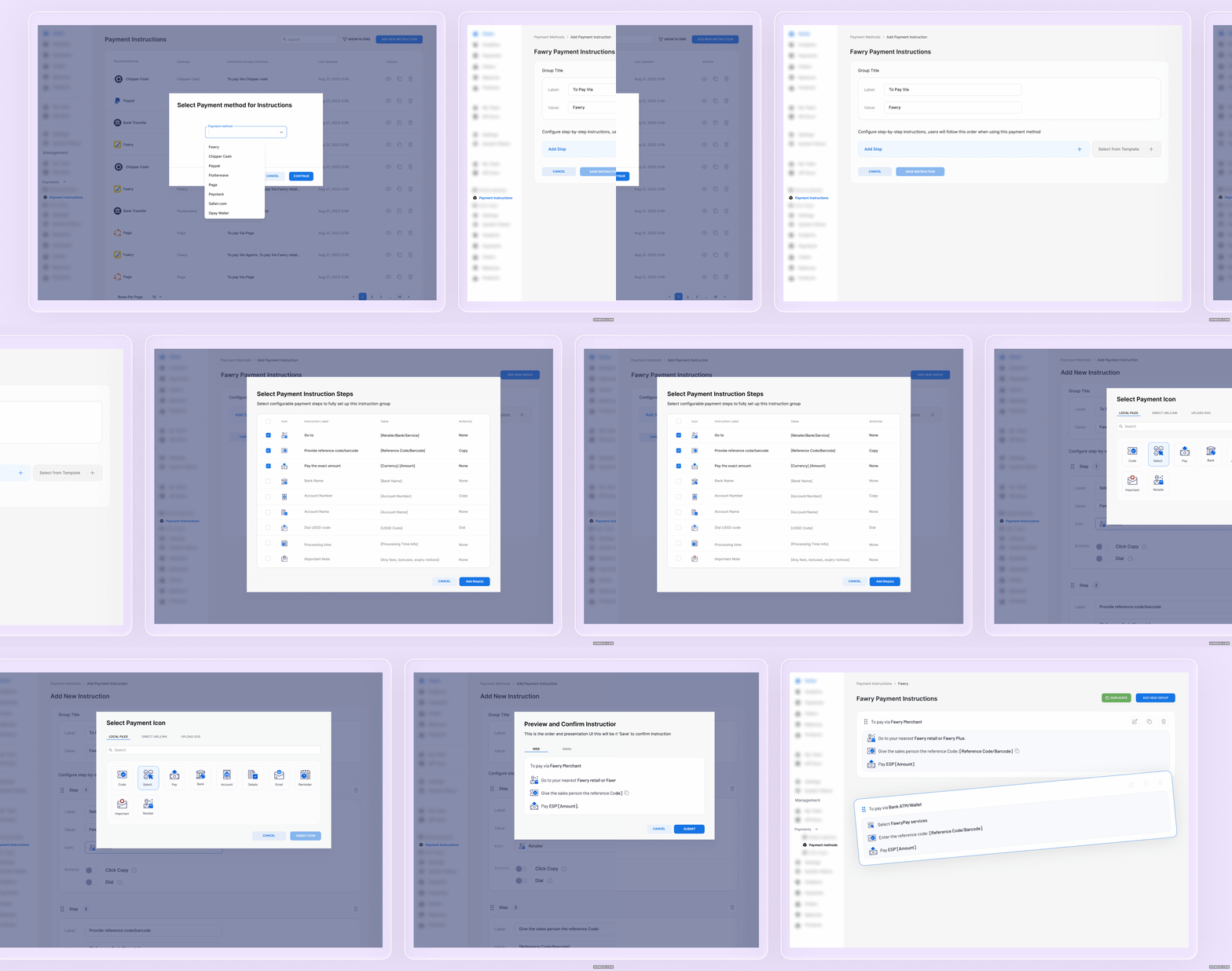
5. Fixing Offline Payments & Payment Instructions at Scale: Centralize and standardize payment instructions across channels and markets.
Why:Offline users especially in MENA struggled with ambiguous instructions and inconsistent guidance, leading to failed or abandoned payments.
Outcome: +42% completion rate for offline payments, especially across MENA markets.
5 a. Designed a centralized Instructions BO system
5 b. Simplified offline payment steps and expectations
Key Decision 6
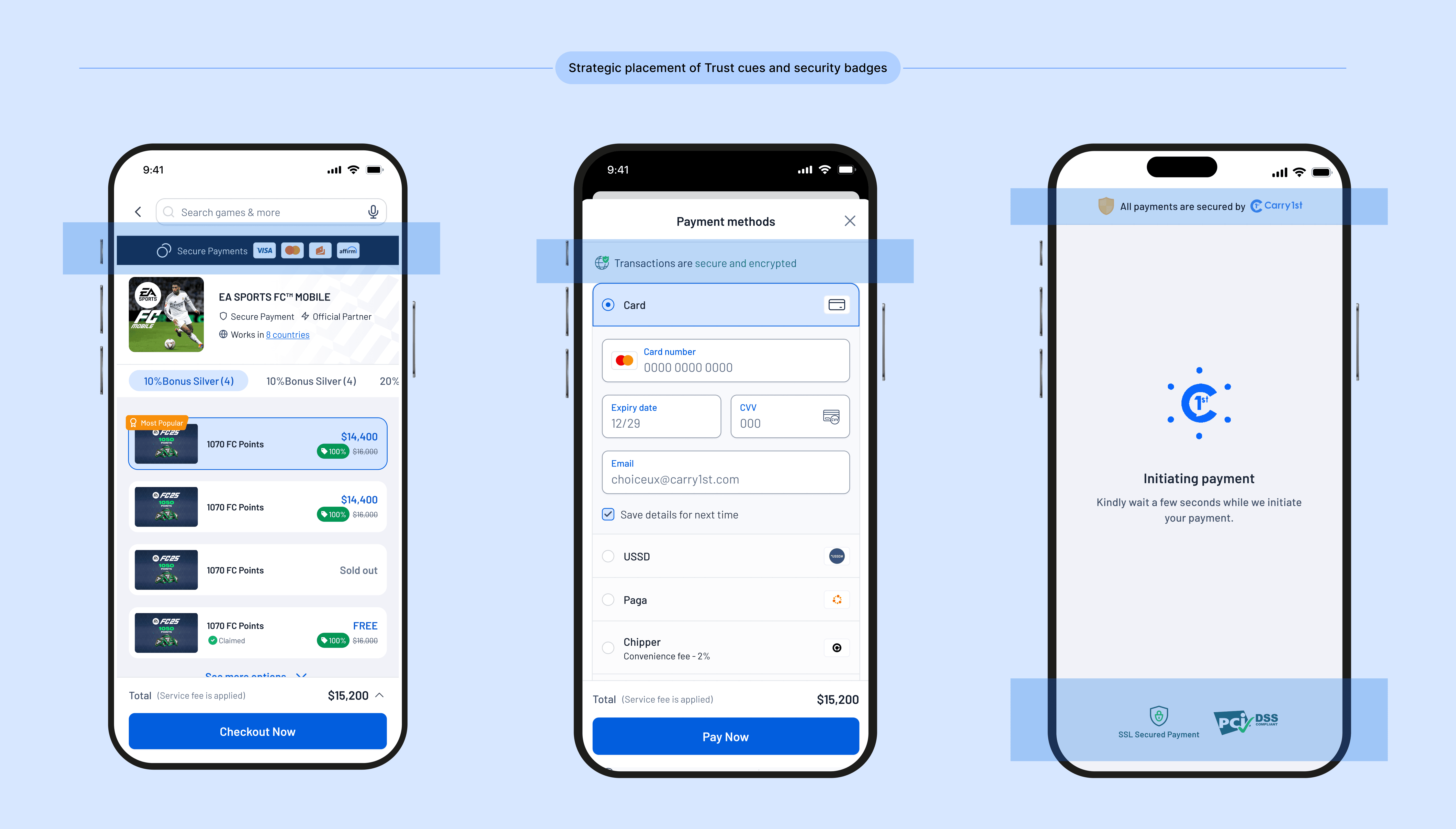
Building Trust at the Moment of Payment: Reinforce trust before, during, and after money changed hands.
Why:Trust broke when users were redirected without a clear loading state, lacked reassurance, or received unclear post-payment communication.
Outcome: Higher confidence, 55% fewer support tickets, and improved payment completion across follow-ups.
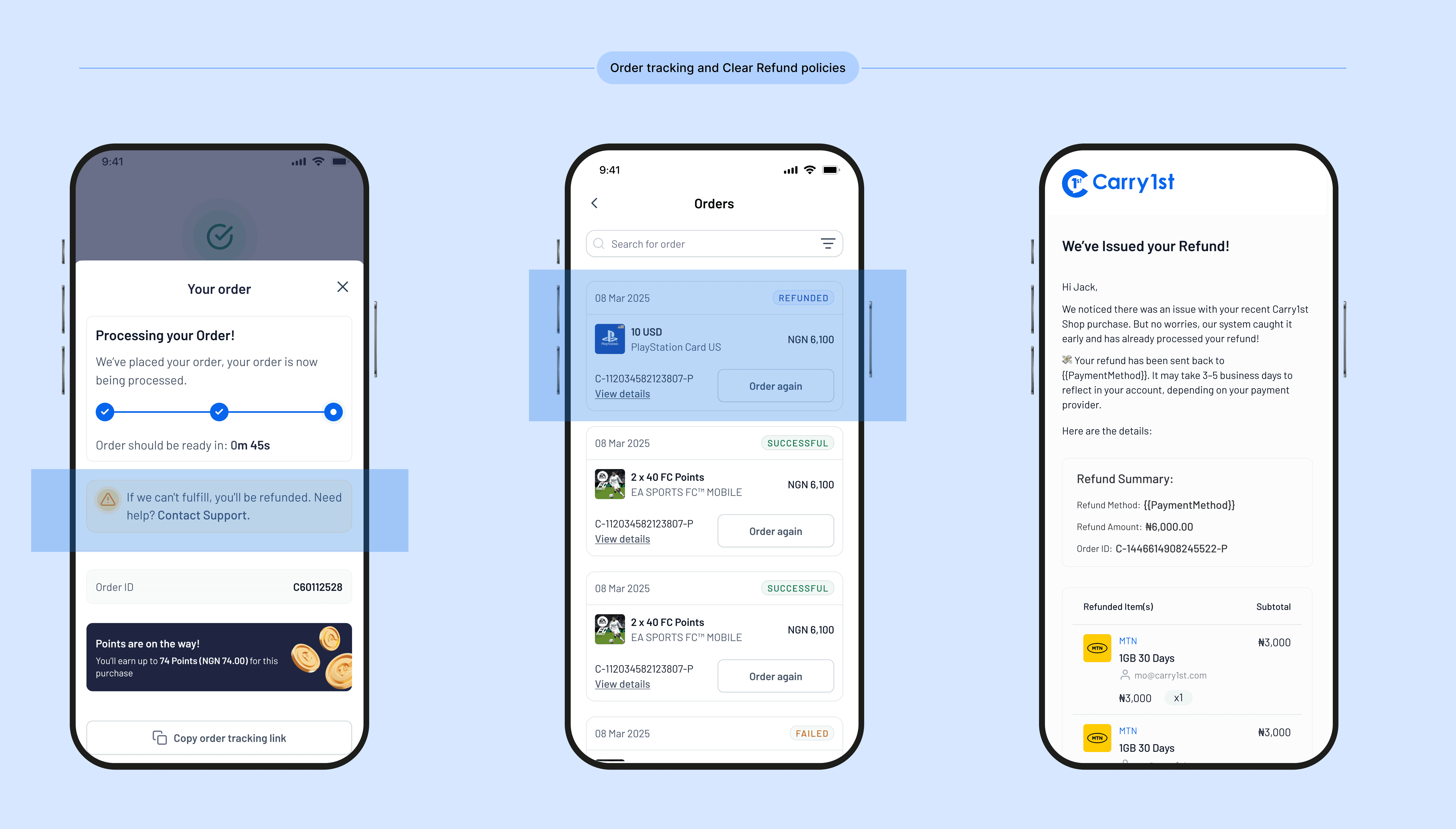
6 a. Strategic Trust Cues and Signals
6 c. Refreshed Payment Email communications
6 b. Order tracking and Clear Refund policies
Tackling Consistency Platformwide
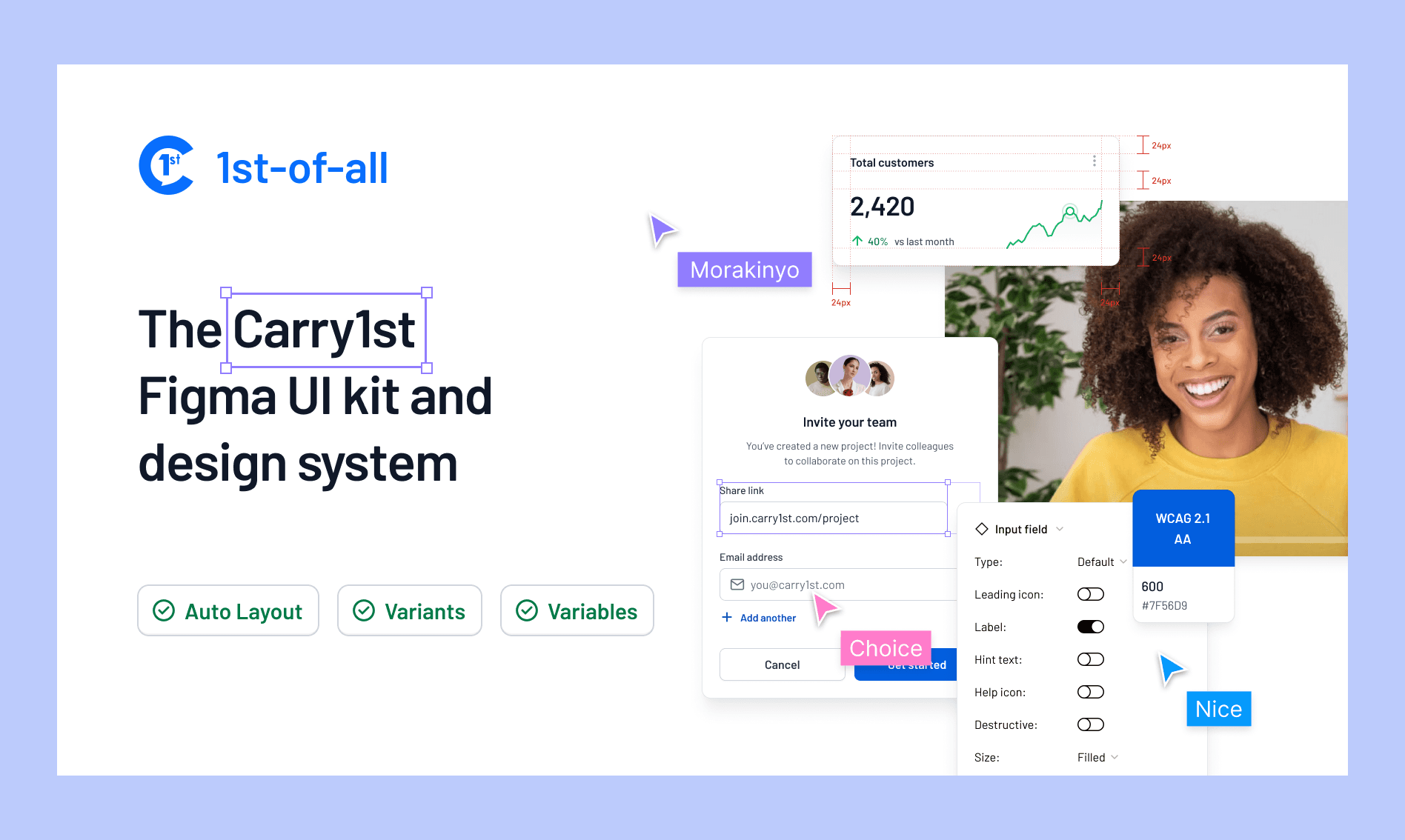
A refreshed design system (“1st of All Design System”) to unify everything.
This project shaped the shared payment component library used across Carry1st's consumer and partner surfaces.
Contributions included standardised payment state components (idle, loading, success, error, recovery) with defined motion specs, configurable error message components that let PayOps update copy without engineering, and flexible payment method components built on a shared token structure that scales to new markets and partners without rebuilding.

Leadership and Team Development
Beyond the design work, I used this project as a teaching opportunity. I ran structured critique sessions with junior designers on the team, using the payment error state decisions as a framework for designing for failure and edge cases.
I also built a handoff documentation template during this project, covering interaction states, edge cases, and engineering annotations, that the team adopted as a standard going forward.
Takeaway
This wasn’t just a platform-wide update. It was a systemic redesign of how payments work at Pay1st aligning user psychology, operational realities, and business metrics.
Infact this project was named 'Project liberty' across Functional teams.
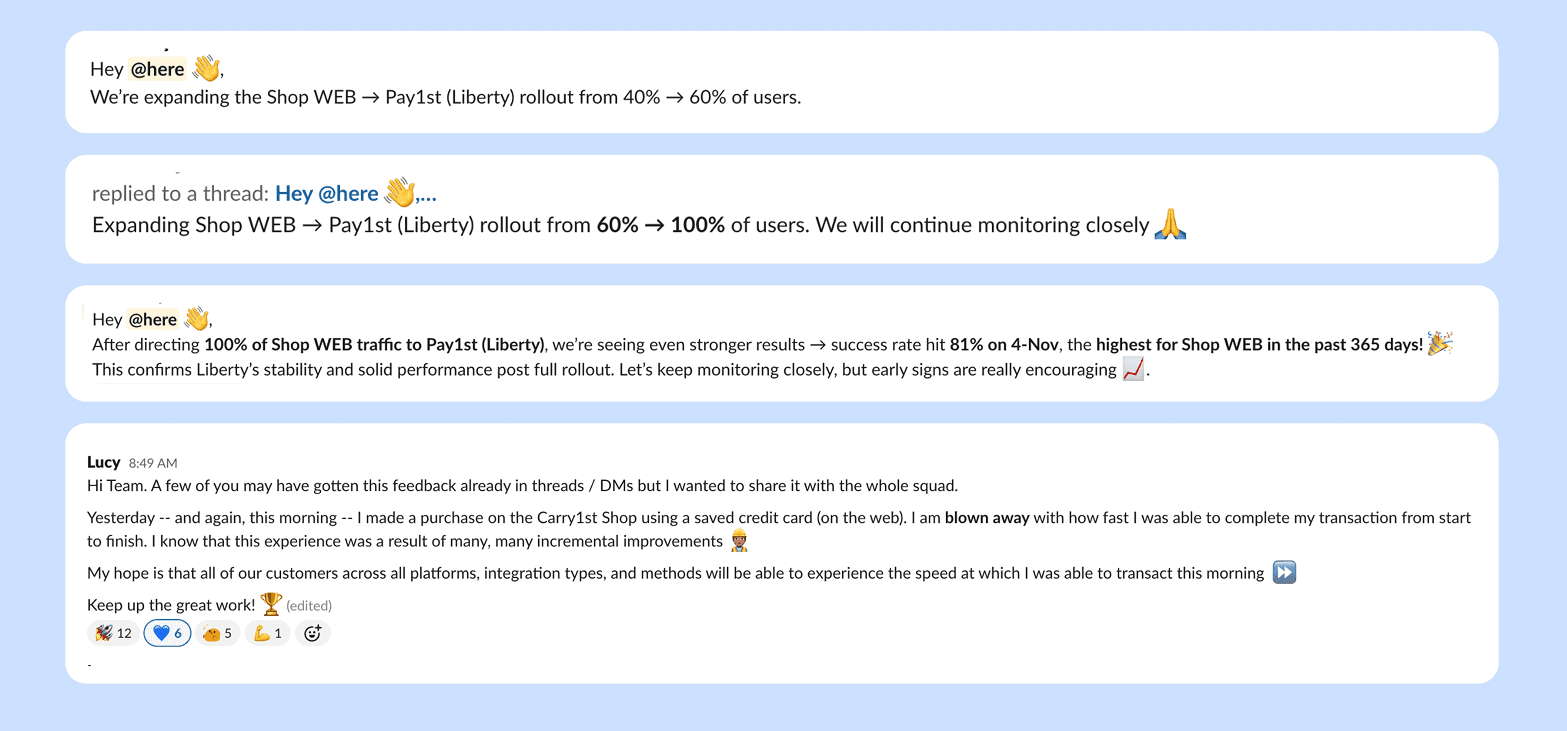
Outcome: Through a gradual rollout and close cross-team collaboration (PMs, PayOps, Devs, Customer reps), we reduced bounce and abandonment, increased L3 success, strengthened partner trust, and gave internal teams far greater operational autonomy.
Articulating Design Decisions
Don't Make me Think
Hooked
Measure What Matters
fatih Koc
Lead PM
"Choice worked closely with us to untangle a very complex payment flow. She helped simplify decisions, align teams, and the changes we shipped clearly improved payment success."
Lucy Hoffman
COO
“She partnered with product and operations. Her work reduced friction in our payment experience and had a clear, positive impact on conversion and customer trust.”
Isaiah Muli
Senior Backend Engineer
“Choice collaborated closely with engineering and designed flows that were easy to build and easy for users to understand. This helped us ship faster and with fewer issues.”
Muneeb Samuels
Senior Staff Engineer
"Choice was thoughtful and practical in how she worked with us. She covered edge cases and helped improve the reliability of the payment flow."